Showing posts with label Conference Report. Show all posts

18 Jun 2026

Literacy for the future: Review of the LIR Annual Seminar 2026

This guest post is by Cathal Madigan, Library Assistant at TU Dublin.

On Wednesday May 13th, 2026, I had the privilege to attend the LIR Annual Seminar 2026. Hosted in the ASIERA Offices in Dublin and recorded over MS Teams, the Seminar had a theme of “Supporting Emerging Literacies,” and asked the question of how libraries design and deliver new literacy programmes. The presentations had a shared idea of literacy, with each presenter showcasing how libraries could hope to use these programmes to bolster services and assist clients.

LIR Group logo of a swan with its wings shaped like an opening book
LIR Group logo, from LIR Group website

The Seminar opened with a keynote from Dr Andrew Cox, Senior Lecturer at the School of Information, Journalism and Communication, University of Sheffield. Focusing on the emerging use cases of AI and how librarians could integrate it, Dr Cox provided an examination of the potential costs and benefits of AI integration in libraries, exploring the importance of knowing how best to safely integrate it into library structures and be aware of how students are using it in their daily activities.

Ann Byrne, Digital Librarian for Hibernia College, spoke about “digital literacy for all” and reflected on the process of creating a course in digital literacy for Hibernia College, a process that began in 2023 in the aftermath of COVID-19 as staff realised that students had no real instructions for how to use digital literacy. This made it a good choice for an open course system as it is a universal need. The pilot programme launched in 2023 and was deemed a success as part of UNESCO's Global Media and Information Literacy Week and Be Media Smart campaign from Media Literacy Ireland. The success prompted a second phase in 2025, which added new lessons and incorporated feedback like a dedicated module on AI.

A office building on Dublin’s North Wall Quay reflected in the water on a bright, sunny day” purely decorative image
ASIERA Offices, North Wall Quay, Dublin 1, where the event was hosted, from archdaily.com
Ronan Madden, Learning & Teaching Team Lead at UCC Library, discussed the new Digital and Information Literacy Framework that UCC had begun developing. A new team, the Framework provides tailored classes on request with a focus on increasing awareness of the different forms of literacy across the university, such as information, digital, media and AI literacy. Ronan outlined how the Framework had been developed and used by students and faculty at UCC, how students assisted with peer review, and how it is intended as a living document that is always innovating and expanding.

Siobhán Dunne,Teaching, Research Support and User Experience, TCD, spoke about the concept of Sustainability Literacy (i.e. the knowledge of the relationship/conflicts between humanity and the environment), discussing the Sustainability Action Plan that Trinity had launched in February 2026 after a survey for students requested sustainability awareness. One of the major components of the plan was that Sustainability Literacy would provide a new opportunity to position the library as a trusted information resource for students and staff. As an example of this, Siobhán shared how part of the Action Plan involved creating a space where students could learn about AI and its impact on the climate, and share their concerns.

An informational graph with a cheese-wheel graphic on the left discussing a library’s Sustainability Action Plan for the year of 2026
A still from Siobhan Dunne’s presentation showing TCD’s Sustainability Action Plan for 2026

Patrick Keegan, Learning Specialist Librarian at RCSI, discussed a pilot workshop for postgraduate learners which included AI Literacy, or learning when would be an appropriate time to use AI. The concept of "cognitive offloading" was discussed (i.e. how the brain can only process so much information so steps must be taken to know ways to offload). Patrick emphasised how important it was to train graduates to be ready to avoid detrimental offloading when in the workplace, and that being able to retain cognitive prowess when working with patients is a key skill. The workshop he worked on provided three examples of issues healthcare students may face as AI usage becomes more commonplace; how to critically evaluate suggestions from AI, how it can disrupt learning journeys, and how to explain the choices one makes in their day-to-day operations. Patrick ended with the key takeaways from the workshop and suggested a “human in the loop” style of AI oversight where suggestions made by AI are always run by a skilled professional first before being implemented.

Dr Simone Fühles-Ubach, Library and Information Science at TH Köln, and Professor Elisabeth Kaliva, Computer Scientist and Educational Researcher at TH Köln, opened the final stage of the Seminar with a shared presentation on a research project they had been undertaking since 2020, based on the “Data Literacy” research project at TH Köln. They presented the progress and research findings of their project, focusing on the contribution and collaboration of academic libraries and the impact this had on students. The Data Literacy Initiative (DALI) at TH Köln has become a centralised shared working space for students and staff, creating an infrastructure to advise students on data literacy and usage of it while researching.

Ben Lee from Shared Intelligence, speaking about future literacy at the LIR Seminar 2026

The final speaker of the day was Ben Lee, director of think-tank consultant group Shared Intelligence. His event was named “Come Rain or Shine: futures literacy for libraries, and the role of libraries in building futures literacy among their users and communities.” Ben discussed how a report was made in 2023 to discuss the challenges facing public libraries in the United Kingdom and how to increase awareness and usage in local communities. The report suggested finding new ways to reverse declining attendance rates in libraries, and to beware the retirement cliff. Ben spoke of Futures Literacy, i.e. the concept of using the ideas of the future to inform the actions of the present. This led into a group exercise where Ben asked those in attendance to combine two uncertain future concepts on a graph to create different versions of the future, showing the different paths an uncertain future can generate, before the Seminar concluded.

The LIR Seminar proved to be a stimulating day. I was pleased to get to attend and found the experience very enlightening. The overall questions raised in the introduction of the Seminar of how libraries design and deliver new literacy programmes was appropriately answered and elaborated on. Each of the different representatives discussed how their own libraries oversaw new programmes to increase awareness of digital literacy among their clientele, providing a wide variety of alternate perspectives that showed how each of the guest speakers came to their conclusions. This allowed for improvements in their offered services and allowed for each facility to be more adept at handling queries asked by the modern library customer. 

6 May 2026

Review of The Academic & Special Libraries Conference 2026


Guest post by Dina Gorelik. Dina is an MLIS Student at University College Dublin

At the end of March, I had the pleasure of attending the LAI Academic and Special Libraries Conference 2026: Reimagining Librarianship: Purpose, Practice, and Possibility as one of the A&SL Bursary recipients. Throughout my MLIS coursework, professors and students have discussed the changing nature of the library profession and the challenges of this time. I was excited to be able to attend the conference to hear from professionals on the ground on what they consider the challenges and core fundamentals of librarianship today, and I was pleasantly surprised with the recurring themes discussed throughout the day, including the importance of reflective practice and using data to justify decision making in libraries and information settings.


The morning keynote speaker, Liz Jolly (University College Cork), set the tone and brought up themes which recurred throughout the day most notably speaking on the importance of reflective practice and relentless optimism as a tool for the onward journey. I was surprised to hear about reflective practice so early in the day; the concept of reflective practice has been an unexpected recurring topic of conversation throughout my MLIS coursework, and its early reference in the day solidified the importance of reflection in my future professional work.


After the morning keynote, there were two parallel sessions, and I chose to attend the one on Open Scholarship, a topic new to me but one I am interested in learning more about. The speakers discussed initiatives in individual universities as well as national initiatives to promote open access scholarship and publishing. Margaret Irons (Dublin Institute for Advanced Studies) and Colm O’Connor (Innopharma Education) were particularly inspiring in their talks on spearheading new projects. Irons spoke about her project to create an open access repository of CELTICA, the publication of the School of Celtic Studies at the Dublin Institute for Advanced Studies. Her internal advocacy began in 2016, and the repository launched in 2025, a reminder that patience and thinking long-term are vital to these sorts of projects. Colm O’Connor also shared a librarian led initiative at Innopharma Education to support student publications. O’Connor identified that students were producing high quality work but were intimidated by traditional academic publishing so he began Innopharma Insights, a journal to highlight the promising student research he was seeing. Now in its second volume, the journal is produced with the available resources of the team; for example, the journal is formatted in-house using Microsoft Word.


The afternoon session had a variety of speakers talking about collections and metadata initiatives, redesigning services, and career reflections. Two speakers spoke about evaluating and reevaluating services at their academic libraries: Genevieve Larkin (Marino Institute of Education) and Francisca Silva (Dublin Business School). Larkin spoke about the development of a five year operational plan to address tensions between the ambitions of library employees versus available resources. She discussed the power of prioritisation in assessing capacity of staff and resources. Silva led the library website redesign project at Dublin Business School. She discussed pulling in user experience and information architecture principles in conducting user research and testing, as well as developing a more cohesive library website layout. I was excited and surprised that these talks solidified the importance of using research and data to demonstrate and justify decision making in libraries, as it has been a recurring topic in my coursework.


Ultimately, I came away inspired by the commitment of professionals to their work, finding ways to serve their users and themselves as thoughtfully, resourcefully, and sustainably as possible. Throughout the day, speakers discussed identifying issues and taking initiative to create something better, often collaborating with colleagues and users to come up with the best solutions. Attendees were open to discussion and chatting with people they did not know, creating a warm and approachable atmosphere throughout the day; I met a lot of lovely librarians and students and left feeling reassured that, despite the uncertainty of the current moment, librarians and information professionals will continue to provide the best service they can, and I am excited to join in the work. The afternoon keynote speaker, Niamh Tumelty (London School of Economics and Political Science), said that she is confident about the future of libraries, and so am I.


Author’s note: Thank you to the Academic and Special Libraries Committee for the bursary to attend the 2026 Conference.


25 Jun 2025

Blog on the Conul conference 2025: Shaping tomorrow, Reflections and new directions.


This review of the CONUL Conference 2025 is by John O'Donnell, who is a Library Assistant at the Glucksman Library, UL.


Thanks to the kind sponsorship of Bibliotheca, I had the opportunity to attend the CONUL Conference as a library assistant who qualified from an LAI accredited coarse in the last 5 years. The Conference took place in the Tullamore Court Hotel on the 28th and 29th of May. This was the first CONUL conference which I would have had the opportunity to attend so I was curious but also excited to find what the conference had in store for me.

The conference opened with the head librarians of the University of Limerick, Technological University Dublin, University of Galway and University College Dublin.  They discussed the opportunities and the threats faced by academic libraries within the current climate of which we work in.

The first of the keynote speakers was Richard Ovenden, who currently holds the title of Bodley’s Librarian & the Helen Hamlyn Director of the University Libraries, Richard comes from a special collections background. The keynote title was Collecting and preserving new imperatives and challenges. Collecting and preserving knowledge is important due to these uncertain times libraries are currently operating in. Throughout the keynote speech from Richard, he continued to stress the importance of collecting and preserving information.

After the first keynote speech, the breakout session which I attended was the lighting talk. In the lighting talk each talk revolved around Auditing digital collections for long term preservation, AI curious to AI conversant, Aligning Open repository Network, AI Literacy at UCD Library and Finally Trends in Open Access Publishing. I found these lightning talks helpful and informative as I currently work in the customer engagement side of the Glucksman Library I want to branch out and begin looking at different aspects of the work performed in academic libraries, such as AI, OA publishing, preserving collections and final the use of Open Repository networks to strengthen practices. These talks were very interesting and helped me further understand other aspects of the academic library which will overall help me in my understanding of what goes on in the day-to-day work within an academic library. After the lightning talk, that concluded the talks for the day. I then took the opportunity to go over and view some of the posters which had been done by members of other libraries around the country.

After all the events, I was given the opportunity to meet my Bursary Mentor, Elaine Harrington from UCC. We discussed the first day of the conference and what I had thought of the whole experience, from the keynote speaker to the lightning talks which I had also attended That concluded my first day at the CONUL conference.

On day two we had our talk from the second Keynote speaker Anne Jarvis, who is the current University Librarian in Princton University in the United States. Anne spoke about her professional experiences and focused on three primary three themes that she believes to be crucial to library leadership.  The three themes which she believes to be the most important are Partnership, Innovation, and Sustainability of Services.

After Anne’s talk, we then had the first break out session. I went to the feedback session of the Record Data Management (RDM) costing model. This session was presented by Armin Straube and Marcus Leaning from UL. The attendees were to view the process of good record data management standards and see if they could find any potential unforeseen costs within the data management plan. This was an informative session which helped me better understand the process required when creating a record data management plan. After that workshop I then attended a Parallel paper talk session from Jenny O Neill, Michaela Hollywood and Oksana Dereza. The three individual papers touched on the topic of Open Research, Reimagining the Library and Transforming text into discovery.

Being able to attend the Conul conference was an excellent experience for me as I only began my full time carrier in libraries in early 2024 so the conference was an amazing experience for me to attend so that I could, number 1, meet people within the field which I work in, and also to gain a better understanding of the work done, not only in the Glucksman library where I work but also other university Libraires around the country. To top it all off, I was fortunate enough to win the annual conference quiz- a highlight of the event.

16 May 2024

Academic & Special Libraries Conference 2024 ‘Fair for all: creating Equitable and Universal Access to Information’


Guest post by Mona Power, Library Assistant at UCC Library

Early on the morning of the 21st of March, I was surrounded by sleepy commuters on the train to Dublin, some already starting their workdays on laptops and tablets. I was struck anew by the Doctorow quote about technological advances, which had caught my eye on the A&SL website several weeks prior:

Universal access to human knowledge is in our grasp, for the first time in the history of the world. This is not a bad thing.

My own journey to being an LIS professional was made entirely possible by the advances Doctorow refers to. I undertook the MLIS at UCD's iSchool during the height of the Covid-19 pandemic, and was able to attend lectures, access library materials, connect with fellow students, and even make lifelong friends - all entirely online.

Yet the access to information that I enjoyed during this time is not strictly universal. And it is not free. This injustice is damaging to global society on many levels, and something I’d not thought about very deeply until I began the MLIS. Becoming a qualified librarian has opened my eyes to the power and importance of universal information access. If we cannot collectively draw from it and contribute back to it, the global pool of knowledge is diminished. Knowledge is not a finite resource. By sharing it, we do not deplete it. By making knowledge access universal, we create the circumstances under which it can be built upon and furthered.

These thoughts carried me to the Ashling Hotel, the venue for this year’s Academic and Special Libraries Conference. I’d been eagerly anticipating the conference since the bursary winners were announced, and even felt a little nervous as I found my way to the conference room. This would be my first experience of an in-person conference, and all week my colleagues at UCC Library had been offering sage advice (chat to people from outside your own library, take some time to look at the posters, take lots of pictures).

The first keynote speaker of the day was Marilyn Clarke, who opened her talk, ‘Libraries as Liberatory Spaces: knowledge justice, sites of memory, and acts of resistance’ with a poem by Ferdinand Levy, Jamaican poet who had lived in Dublin in the 1930s. Marilyn used Levy’s poem, and the fact that he is not well known as a figure of literary history in Ireland, as a jumping off point for her talk. She focused on the question of who is and is not remembered – and who we do, and do not, study in the classroom. Marilyn’s talk was expansive and inspiring, and even as I took notes, I knew that I would have a challenging time doing it justice in this review. Four words that I underlined several times in my notebook are: Recognition, Reparation, Restitution, Representation. These are words, Marilyn says, that she comes back to whenever she needs to think about what she is doing, and in answer to the question “what does social justice mean to you?” Listening to Marilyn speak, it became clear to me that knowing your “why” - the reason or purpose behind your actions - is a deeply valuable compass for life.

The first of the morning’s three case studies, ‘Inclusive Technology is everywhere: Why is it then so hard to find?’ was presented by Trevor Boland, who, according toinformation gathered by the A&SL Committee, can crochet a pair of slippers in three hours. Trevor’s presentation took us on a whistle-stop tour of some incredibly useful Assistive Technology (AT) – from the glasses many of us wear on our faces each day, to document conversion systems like SensusAccess, and Optical Character Recognition (OCR) technology that can read text within a digital image.

Dean Watters and Dr Ruth O' Hara delivered the second case study of the morning, ‘Diversifying Dewey: Changing the DDC23 to better represent Irish Travellers’. This uplifting presentation was a brilliant real-life example of librarians challenging established systems and making positive changes. The presenters stressed the importance of doing this work not just because it is vital, but because it is work that inspires others and that people will build on in the future.

Eilís O' Neill concluded the morning’s presentations with her case study ‘Let’s take it outside (the classroom): Implementing UDL practices in non-teaching roles’. Eilís provided a compelling argument for undertaking a universal design for learning (UDL) course, and applying UDL principles to library work. She emphasised the importance of simplifying language and letting go of jargon.

The second keynote speaker of the day was David Hughes, who gave a rousing presentation entitled ‘Why Do We Need "Open", Anyway?’ David approached an answer to this question by introducing what he termed the “four horsemen of the library apocalypse”: Hyper-capitalism, academic publishing, artificial intelligence, and the fact that John Deere tractors now come with a remote kill-switch. David then launched into compelling arguments for each of his horsemen, citing Cory Doctorow’s "Entshitification" model, and the importance of true open access (OA) publishing. Some of David’s slides drew audible gasps from the audience, in particular his screenshots of blatantly AI-generated text that had made its way past the peer review process and into academic journals. For David, “open” is not just about publishing, but a philosophy and a rallying call. He urged librarians to lead by example and promote open educational resources and diamond OA.

The second round of case study sessions started with a presentation by Laura Rooney Ferris, entitled ‘Building a culture of Open Research for Health and SocialCare Practitioners’. Laura described the significant barriers to open publication for health practitioner researchers. A particularly powerful point that she made was that, in her own words, “medical research conducted on the public should be accessible to them.”

Jane Buggle and Marie O' Neill followed with their case study, ‘Diamond Open Access Publishing: Navigating the Impact of a Single Library Published Journal’. Jane and Marie made a passionate case for diamond OA, citing the destructive influence of the gold OA publishing model, and echoing David Hughes’ point that the truth is paywalled while lies are free. "We're not going away", said Marie, “this is only going to get better.”

Paola Corti’s case study, ‘Librarians as agents of change - SPARC Europe's Strategy to advance Open Education in Europe’, introduced us to the work of The European Network of Open Education Librarians (ENOEL), a network of academics advocating for open education in Europe. Paola praised the generosity of librarians for sharing their knowledge and encouraged anyone wishing to get involved with ENOEL’s work to become a member.

The final case study of the day, presented by Ann Byrne and Emberly Davey, was titled ‘Digital literacy for all: reflections on creating a Digital literacy OER’. Ann and Emberly described their journey of developing an open educational resource to improve digital literacy. Modelling the precise generosity Paola Corti had cited in her presentation, Ann and Emberly have made their course open to all.

The day's talks emphasised the vital role of libraries in promoting knowledge equity, in particular at the intersection of technology and social justice. These speakers demonstrate that the future of librarianship will be shaped by a commitment to inclusivity, openness, and dismantling barriers to information access.

For my part, I feel privileged to have attended the A&SL conference. The passion and generosity of these librarians is inspiring. It is a wonderful thing to attend a conference and feel that you are among “your people” - I am grateful to the A&SL Committee for awarding me this Bursary.

Image by A&SL Committee

13 May 2024

LAI CILIP joint conference overview 2024

Guest post by Amy Bond, Assistant Librarian and Information Specialist, Bord Bia Library

This blog post will give an overview of the LAI/CILIP joint annual conference in Newry. The theme of the conference was Building for the Future, and presentations focused on how libraries could work to maintain their relevance and usefulness into the future. Talks looked at how this could be achieved through innovative service offerings, and the leveraging of new technology. It would be impossible to cover the wealth and breadth of information shared within a blog, but I will outline some of the key insights that resonated with my own work, and hopefully these nuggets might be relevant to others too.

In his keynote talk on the role of AI, Dr Andrew Cox made clear that AI will play a key role in how librarians work in the future. We will have a part to play in developing AI literacy within our user groups, but it may also have potential for better collection management, better access to digital collections, and more insight into the data we are gathering. However, this will only be possible with access to proper resources.

While much of the conference focused on the importance of new technologies, and innovative service offerings, Sue Williamson, president of CILIP, emphasised in her talk that libraries are still about books, and shouldn’t lose focus on this traditional role of promoting books and reading. She noted that “if you read for pleasure, reading for purpose becomes effortless.”

Anthony Hopkins talked about his work as part of a working group in the UK looking to improve how eBooks are offered through public libraries. Rather than trying to go down the route of legislative change they are currently trying to work with publishers, and have found them open to discussion. Their focus now is a research project to build an evidence base so they can have strong conversations, based on robust data.

There were perhaps some surprising results from Dr Claire McGuinness and Dr Stefanie Halveka’s research into student perceptions of ChatGPT. Only 11% of students were using these tools quite often, and 55% were using them rarely or never. Students most see the benefits in help with research, with 34% of those using it saying it is for research, while 33% would be motivated to use it for help with research. This clearly shows a need for librarians to understand and work with this technology. Reassuringly, the majority see taking results directly from these tools as the same as copying from a website.

Jane Peden discussed the redesign of library spaces within Ulster University. This work was done with emphasis on enhancing student experience. There have been a number of shifts in how the library space is viewed; from collecting to connecting, and to seeing it now as a relational collaborative space. This has also been reflected in a shift in how staff engage with students; from service and support, to partnership and expertise.

Leona Burgess, of Louth public libraries, and Ruth O’Rourke, executive librarian in Our Lady of Lourdes hospital, discussed how they came together to create a project encouraging parents to read to their babies within the neonatal unit within the hospital. The success of the project showed the impact that can come from collaborating across library sectors, with minimal financial investment.

Ben Lee led an interactive workshop which brought to life the toolkit from CILIP’s Come Rain or Shine report. He explained the concept of future literacies, before taking us through how to work with different future scenarios for future planning.

Dr Maeve O’Brien from the Digital Repository of Ireland, gave an overview of the service, its value, and their collections. She noted that when ingesting collections from other organisations, they provided technical support, but ultimately left control over how collections are organised to their owners as they would have a much better understanding of their content.

When looking at how libraries can leverage machine learning, Daniel Van Strien noted the limits of using models not designed specifically for library use, but saw more potential in librarians coming together to build on open-source models to design tools built with libraries in mind.

Overall, the key takeaway from the conference was that librarians need to plan for the future, to maintain strong meaningful services. Time needs to be spent considering what the future might look like for your library. Consider different future scenarios, and how these might impact your work. How might your users change, and will this impact what they want from your service? How might technological shifts impact how you work, and the services you deliver? Do you need to upskill in any particular areas to prepare for these potential changes? We might not be able to predict the future, but we can prepare for it.

post-it note with light bulb pinned on board

Photo by AbsolutVision on Unsplash

29 Sept 2022

The coming together of librarians post Covid - WLIC 2022


Guest post by Aisling Smith. Aisling recently graduated with an MLIS in UCD and is currently working at TU Dublin Tallaght Campus 

When New Zealand found they were unable to hold the 87th World Library and Information Congress (WLIC) in 2020 due to their venue, the New Zealand International Convention Centre in Auckland, being destroyed by fire, Ireland seized its’ opportunity and stepped in to save the day by offering to hold it in the Convention centre in Dublin. As a result of the pandemic, it was delayed until July 2022 and the subsequent return to in-person meetings and networking after an absence of two years, probably made 2022 the best Congress ever and cemented Ireland's place in world librarianship.

Being a volunteer team lead ensured I was kept busy during the Congress, but I endeavored to attend the session entitled “News Literacy: Fighting Mis/Disinformation at your library” in full.  Fake news and misinformation really came to the forefront with the rise of Trumpism and continued to be a major issue during the pandemic with increased dependency on digital resources for communication, information, and learning. Liffey Hall 2 was packed for the session and the presentations and Q&A session was most enlightening. We appear to be in a post-truth society, where beliefs are influenced by emotions and opinions rather than reason. Freedom of information gives freedom to create and disseminate fake news but fake news is a threat when aimed at those who are in a vulnerable situation or unable to think objectively.

We were advised that Nigeria might even have more problems than most due to the proliferation online of dangerous remedies even before Covid-19 such as salt for Ebola and that fake news can spread panic, tension, and fear in populations. In our post-truth era, young people are predominately dependent on social media and other online sources for information so especially vulnerable to fake news and misinformation. Fulton and McGuinness (Ireland) related how they developed a course for training librarians in media literacy to enable them promote media literacy in the community. Rajic from Serbia reminded us that librarians had to be conscious of the sensitivities of users when promoting media literacy, to anticipate anger and upset when serving “as the patrons’ shield” against fake news. Nguyen Thi Kim (Vietnam) reported on research that indicated that the dissemination of fake news or misinformation was reliant on poor digital and media literacy and this view was postulated by all presenters. The ensuing Q&A session included a discussion on tools to teach critical thinking. I learned that the CRAAP test is now deemed only fit for general literacy as opposed to media literacy and might even have a negative impact on students and leave them worse off. The SIFT method introduced by Michael Caulfield was proposed as being most effective especially regarding digital literacy. The importance of agile project management in libraries was highlighted as librarians have had to adapt and use strategies from other professions ever more frequently in recent years especially since Covid.

The importance of informal interactions at such an event cannot be overlooked. IFLA’s mission ( 2019-2024) is to “inspire, enable, engage, connect” and the Congress gave participants a chance to reconnect with others and share experiences and ideas. The poster sessions were an excellent way of promoting one's work and ideas, and one would be hard put to find so many librarians interesting and passionate people in such a small space.  Covid-19 highlighted the importance of libraries to governments and the general public. IFLA's WLIC 2022 gave librarians from all around the world the opportunity to reconnect by discussing important issues, networking and dancing to YMCA at the disco in the Lexicon public library in Dun Laoghaire. Volunteering at WLIC 2022 presented the opportunity to experience the friendliest conference one could attend. To belong to the tribe of librarians means one is consistently in the company of empathetic, altruistic, opportunistic, and optimistic colleagues, this is what made WLIC 2022 such a success and explains why the future is bright for libraries!

20 Sept 2022

Review of Seminar on Academic Libraries at WLIC 2022.


Guest post by Naomi Faris, from Cork. Naomi has recently completed her MLIS at UCD) 

As an MLIS student with little practical experience in the library world, I volunteered for the WLIC IFLA that was held in Dublin at the end of July this year. Never having attended an event like this before I was unsure of what to expect but I found the experience to be interesting and enjoyable. Meeting volunteers from around the world and hearing their experiences of working in the library world was inspiring as was being able to sit in on various sessions. One session that was particularly memorable was given by three Irish librarians working in academic libraries. The topic was innovations in academic libraries during the pandemic. 

Aoife Lawton, a national health services librarian from the HSE library in Dublin, spoke about the problems associated with staff wellness during this difficult and unprecedented time and the steps that the library took to combat them such as energy pods for frontline staff. Innovation and creativity were key concepts and could be seen in other areas such as the LAMA bot (Library Ask Me Anything), a design thinking workshop and a maker lab. Aoife also exhorted the library as a third space and the importance of leveraging A1 technology, an up-and-coming area in libraries of the future. 

These ideas were also seen in the piece by Michela Hollywood, librarian at Maynooth University. Michela spoke about the library as a flexible space and the environment was the theme underpinning many of the ideas that Maynooth embraced during the pandemic. This involved a celebration of World Africa Day and the redesign of the reception area with light and plants to create a welcoming, eco-friendly space. Michela also mentioned the energy pods which were installed in 2018 and were the first for a library in Ireland. Other creative ideas presented were a short story dispenser and wellness days for staff. In terms of covid measures Maynooth library incorporated a click and collect service as well as staff training and development. 

Martin O’Connor of UCC library in Cork spoke about ‘Shush! Sounds from UCC Library’ on UCC 98.3FM, an innovative radio show featuring library news, shows stories and some of the DJ’s favourite sounds in the mix. This show is broadcast for 1hr on campus radio and is used as a promotional tool to promote the library to students who may not be aware of all the library has to offer. The show also features interviews on all things library related such as advice for new librarians and issues affecting librarianship in general. This appears to be the first dedicated library radio show in Ireland. 

What stood out most was the innovation that each librarian showed as well as how libraries rose to the challenge of a difficult set of circumstances that occurred in 2020. As a newly qualified librarian it was interesting too to note the commitment to wellness, the possibilities for AI in libraries and how problems can be solved with creativity and innovation. 


9 Aug 2022

CONUL Conference 2022: three short reports...

Below we have three short reports from the recent CONUL Conference held in Limerick. These reports are written by the CONUL Conference Bursary Winners for this year., Catherine Gallagher, Eilish McLaughlin, and Niamh O'Brien.
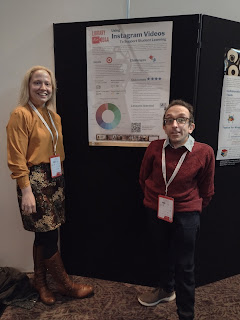

Photo courtesy of Catherine Gallagher

Report one is from Catherine Gallagher, Senior Library Assistant, Reader Services, TUS Midlands 

Reflections on Library Futures: My experience of CONUL 2022.


When I received the news that I had been selected as the awardee for one of the CONUL Conference’s bursaries, I was absolutely delighted! At the time I was working in the Library at Carlow College, St Patrick’s, and put simply, the bursary was the difference in being able to attend the conference or not. Little did I, nor anybody else know, the global crisis that was just around the corner that would change not only how libraries would have to rapidly transform their services to meet the needs of their stakeholders, but indeed the world at large. As the world began to shut down and ‘remote learning’ for all students became the new business of the day, it became apparent fairly soon that the conference wouldn’t happen. I would be omitting a truth if I didn’t say that for a few moments I had the small, it’s-all-about-me thought: typical this would have to happen when I win a bursary to go to CONUL….

Fast forward to 2022 and the e-mail from Nicola Smith that I still had the bursary from 2019, well there may have been a silent whipeeeee at my work desk!  Much had changed, including my role, as I had moved from Carlow College to what is now a thriving and expanding University, TUS: Midlands Midwest. 

Where to begin? This was my first library conference and I have nothing but good things to say! It was tough to decide which talks to go to and in terms of planning which talks to go to and where, I found the CONUL app very useful for organising this. Many of the talks focused on the rapid pivot libraries had to make due to COVID-19 in terms of rolling out supports and services from largely on-site to online and libraries demonstrated their ‘capacity for agility’ as Emma Goode from NUIG aptly described it. I also found interesting her comment that libraries are like the ‘wall paper of institutions’; we are often not noticed but badly missed if we weren’t around. COVID-19 certainly had the effect of demonstrating to students and all stakeholders alike, the important role libraries play in providing not only spaces for student learning, but providing students with the skills and access to quality scholarly information. We are all now only too familiar with the concept of ‘fake news’ and as Ciara McCaffrey from UL and Emma Goode from NUIG noted in their talks, it has become just as important to teach students how to deal with all information, not just scholarly information.

Open and equitable scholarship was another key theme present in many of the talks. Keynote speaker Chris Bourg from MIT highlighted this in her talk where she discussed MIT Libraries’ urgent mission statement in response to the pandemic. Top of the list on Chris’s ‘urgency principles’ was the concept of ‘Digital First’ and where digital is certainly not new, the accelerated pace at which libraries have had to provide digital resources and equip students with digital literacy skills is. Ciara McCaffrey in her talk likewise posed interesting questions around the future of print collections and the impact of eBooks on libraries.

As my passion is for Teaching & Learning, I thoroughly enjoyed Michelle Breen’s talk on digital literacy for students. I came away with some great tips that are worth sharing:

  1. Teach what students want to learn
  2. Use succinct messaging on relevant channels, e.g. Social media
  3. Tweak, refine, adjust and have another go
  4. Make academics your advocates
  5. Use multiple formats

On the topic of using multiple formats, Kathryn Briggs from ATU gave a great talk on applying the principles of UDL to information and digital literacy. The key message I took from this to apply to my own teaching role is to minimise barriers for student learning and offer them flexibility. This is essential, and it was inspiring to see how other libraries are incorporating the UDL principles into library instruction.

I could go on and on, I really could. I found Martha Bustillo’s from UCD’s talk particularly inspiring. In her discussion on her role as the Digital Learning Librarian, she provided some excellent tips on how librarians can develop successful intra-campus social interoperability and it reminded me of Emma Goode’s comment I mentioned earlier on how the library can often be like the wallpaper of institutions, often not noticed but badly missed if it wasn’t there. They were all excellent but the 3 main takeaways that resonated or me were:

  • Speak their language.
  • Timing is essential.
  • Be confident in your value.

The conference was rounded up with lively panel discussion on day 2, and I found it particularly heartening to hear Dr. Patrick Ryan from UL’s words of praise and commendation for the stalwart role academic libraries have played in not only keeping the show on the road, so to speak, during COVID-19, but indeed to reflect on and transform library services and supports to meet the needs of our ever diversifying and expanding student population. I was reminded of one of Michelle Breen’s tips referred to earlier, and of two more of Martha Bustillo takeaways: make academics your advocates, secure buy in, and know your audience. If we are to take Dr. Patrick’s sentiments as a guide, we are clearly on the right track. 

So if in doubt, apply for the bursary!! Like me, you may not think you’ll get it, but you might, and if you do you are in for a fantastic experience! Lots to learn and lots of people to meet!


Report two is from Eilish McLaughlin

My name is Eilish McLaughlin and when I won the student bursary in 2020, I worked as a cataloguing library assistant at Queens University Belfast and acted as the students and new professionals officer for CILIP Ireland. I have also previously worked as a graduate trainee in the library at the University of Bradford and at Shrewsbury International school’s library in Bangkok. I have just recently completed my Master's Degree in Library and Information Management with the University of Ulster. Since winning the bursary, much has changed (to say the least!) I’ve moved from Belfast to Portsmouth, began a new post as a Sales and Marketing Consultant for PTFS Europe, and finished my studies. 

I had seen the bursary advertised on Twitter and thought it’d be a great way to engage with other students and new professionals in attendance and gain insight into the sector and its future outlook. It was also my first real-life conference I’d be attending after two years of virtual events. While I’d learned a lot from taking part in virtual events, which proved to be something of a professional lifeline during the pandemic, I was excited to have the full 3D, in-person experience in Limerick! 

After a year of living and working out of the country, I was also excited to be back and in touch with the academic library sector in Ireland. Upon my arrival at the Limerick Strand hotel, I was delighted to run into two former Queens University colleagues who were presenting a lightning talk that morning on creating video training materials for staff. This followed an excellent Keynote by Chris Bourg, Director of Libraries at Massachusetts Institute of Technology who, despite having begun their talk with a disclaimer about being a bit rusty on presenting, delivered a compelling talk on MIT libraries and their concept of the future of libraries—which is indeed now!

Much of the discussion focused on how library and information professionals navigated the physical limitations brought about by the pandemic and how this operational context could be balanced alongside the need to provide in-person support for students and colleagues. Speakers presented much scope for innovation in the areas of blended learning, hybrid working, and flexible library spaces to name but a few key topics. I was particularly interested in Day 2’s keynote from Melissa Highton, Assistant Principal for Online Learning and Director of Learning, Teaching, and Web Services at the University of Edinburgh. I studied for my undergraduate degree at the University of Edinburgh and also completed my master's degree via online learning so I enjoyed hearing Melissa talk about the University’s continued success with online modes of learning and her advice for supporting those studying and working in this way. 

PTFS Europe, the company I currently work for, is dedicated to providing Open Source solutions for libraries. Since I began working for PTFS Europe last year, I have become extremely invested in the Open Source movement and its analogues; Open Science, Access, Education, etc. One of the aspects that I most enjoyed about CONUL was the positive conversation around these Open Movements and the changing scholarly communication landscape. I also enjoyed catching up with colleagues from Interleaf, PTFS Europe’s Irish equivalent, who had a lot of Open Source Wisdom to share! It was encouraging to see that in a programme that looked to the future of libraries, Open Source was very much part of that vision. 

I had a wonderful time and was so glad to attend. I’m very grateful to CONUL for awarding me the student bursary and would recommend that any current MLIS students apply for the chance to take part in a brilliant opportunity for professional development. 


Photo Courtesy of Niamh O'Brien


Report three is from Niamh O'Brien, ICT Support, Library Assistant, TUS Midlands

Pandemic delays, posters, and prizes: reflections on my first in-person conference  #CONUL2022

I was sitting in the UCD library with my head stuck in my laptop trying to finish my assignment at the end of the first semester of my MLIS when I received the news that I had won the student bursary for CONUL2020.

Fast forward a couple of months and I had moved back in with my parents, was studying from my childhood bedroom, stuck in lockdown and found out CONUL would not go ahead in 2020. It feels like a lifetime ago now. 

*****

I’d just received a job offer for my first library assistant job position in December 2021, when the conference organisers got back in contact with me to let me know they would honour the bursary I originally received in 2019 for CONUL2022 in Limerick.  Five months later I packed my suitcase and headed to Limerick with my conference poster and coffee in hand. 

Once I got my poster up, I headed for the free stuff. I love free stuff, and you know what online conferences don’t have? Free stuff. I started gathering souvenirs to bring back to my co-workers immediately but was quickly side tracked when I bumped into some familiar faces from Galway who showed me the ropes in the Hardiman library when I did my pre-MLIS work placement. Soon I was chatting with former colleagues and classmates that I hadn’t seen in over two years, and meeting twitter mutuals in person for the first time. 

I also had the pleasure of meeting Ellen Breen who was my conference mentor. A lovely bonus for receiving the student bursary was that I was assigned a conference mentor. It was great to have someone to touch base with throughout the conference and someone to ask for some advice before the conference. Although I had attended plenty online conferences, I had a feeling I couldn’t wear pyjama pants to CONUL so I reached out to Ellen beforehand for some dress code insights!

CONUL opened with (well the official opening but after that) a keynote from Chris Bourg from MIT who talked about how libraries have had to focus on a digital first (but not digital only) approach to providing resources, especially since the pandemic. 

After the keynote I scurried upstairs for the first session Technology and Innovation in Libraries. The first presentation in this session starred David Carlos Rinehart who went on to win an award for his ability to hold it together and stay calm despite a myriad of technical difficulties. David wrote a hilarious blogpost about that here (Link: https://www.libfocus.com/2022/06/keeping-calm-in-face-of-technological.html). At the time I assumed he was very calm but I’ve come to learn he’s a great actor! 

During lunch, I took up my position beside my poster to present the Laptop on Loan scheme at TUS Midlands, answer questions from the other delegates, and pass out the bookmarks I had made about the scheme. 

The second session of the day centred around the very important subject of library services at the heart of EDI. To close the conference-y part of day one, there was a fantastic panel focused on the future of libraries, sustainability, and the key external influences for academic libraries. Then I wandered back to my room, drank more coffee, and got myself ready for dinner. After dinner I went back to my room at a very reasonable hour and got loads of sleep so I would be refreshed for day two. Okay that’s a lie. I stayed up all night chatting with all the lovely librarians I had met during the day. 

Dr Melissa Highton kicked off day two with her keynote where she spoke about her role as digital technologist at University of Edinburgh and how they meet the challenges and demands that arose from the sudden university wide pivot to online learning.

Later that morning Molly Twomey from UCC presented on Using Social Media and Humour to Engage with Students. I found out later that Molly is a poet, so I ordered her poetry collection and found out she’s very talented. I think I’ll be a bit start stuck if I meet her again. 

In the second session of day two, the OER team from NUIG discussed their OER project. Having previously attended a longer, half day workshop on creating OERs in Galway I was seriously impressed at the amount of information these guys fit into their 20-minute presentation slot. 

In the final session of the day I regrouped with all the gang from TUS Midlands to cheer on our colleague Assumpta who presented with the Library Carpenters.

Before the final panel discussion and conference close, the winning conference posters were announced. My colleagues Emmet and Catherine came joint third place, and I came second! This was a great thrill and a great way to end what was a very enjoyable conference. 

I’d rate my CONUL experience very highly and look forward to next year! 


Photo courtesy of Niamh O'Brien