29 Aug 2012

How do you select a journal for your LIS research?: Survey participants required

Photo: thefirebottle
In many disciplines journal impact factors or tradition and prestige hold significant weight when authors are selecting a journal to submit their research to. However coverage of LIS journals in impact indices like the JCR is patchy, and many (including open access titles) are relatively new and have had little time to acquire an imposing reputation. Moreover, the relatively high volume of practitioner research and traditionally strong links with the publications of professional organisations are further characteristics of the discipline.

Which factors influence your decision when selecting a journal to submit your LIS research to?

*Update* The survey is now closed - Many thanks to all those who participated. The results and analysis will be made available via the blog when completed.


The survey contains four questions and should take less than five minutes to complete. All data received is completely anonymous and you don't need to enter any personal information.

Using the online questionnaire above I hope to collect data to answer the following research questions:
  • To identify the factors that influence the choice of journal when submitting LIS research
  • To estimate whether the relative importance of these factors differs across: 
    • Geographic region
    • Sectors/roles
    • Those who have previously submitted research and those who have not 

If you have not yet submitted any LIS research to a journal, but intend to or think you might at some point in the future, you can still complete the survey. There is a question in the survey where you can specify/clarify this.

What constitutes a 'journal'? For the purposes of the study, a journal refers to any publication that publishes scholarship relating to a particular academic discipline or disciplines.Therefore this definition includes publications of professional organisations which may not necessarily be peer-reviewed or considered academic journals in the strictest sense (e.g. SCONUL Focus). Also, note that the study relates to LIS research rather than just LIS journals.

Many thanks to members of the LIS Career Development Group for helping me to pilot the survey and for providing valuable feedback. If you have any queries about the study, just drop me an email at michelledalton [at] gmail.com or tweet me @libfocus. All tweets and shares greatly appreciated :)
Posted on Wednesday, August 29, 2012 | Categories: ,

24 Aug 2012

Building e-learning solutions with PowerPoint

I guess that many of us are fairly alright with using PowerPoint; after all, it's still the leading and most widely used presentation software out there (as an aside, here's a quick MS PowerPoint vs. Open Office Impress comparison/discussion). But when it comes to creating more dynamic, interactive online learning, pushing the capabilities of standard presentation software becomes quite challenging.

E-learning refers to the use of dynamic electronic mediums (e.g. through podcasts and webcasts) that provide access to online learning resources. Gruca (2010) points out that e-learning is a complex concept mixing a wide range of learning methods, different educational forms, models, and computer techniques. It can be an alternative to traditional learning or represent blended learning as enhancement to traditional teaching. A brief history of e-learning can be found here. E-learning offerings in the library typically revolve around information retrieval strategies, organising information and interactive training on specialist databases. The visual presentation below shows how complex the reality of e-learning is from a librarian's perspective.
Source: http://library.queensu.ca

Clearly, multiple facets steer e-learning solutions with library users as their core audience in mind. For example, different actors are involved in the creation of e-learning products (look out for participants in the diagram above): information technologists, teachers, librarians, students, instructional designers and developers.

However, not all libraries have access to relevant specialist personnel in-house, let alone the required budgets to cover the production cycle expertly. In extreme cases, the production of e-learning is a one-person show coming along with all its advantages (total control) and disadvantages (limited/no access to specialist expertise).

Going solo requires a bit of legwork and patience. It's a good idea to cover some ground before getting into the thick of it. Below are three handy resources (there's a lot more out there):

The e-learning centre is a free information resource about e-learning and learning technologies for business education, not-for-profit or the public sector. The site provides a collection of resources including book reviews, research articles, websites, case studies and more. See also the E-learning centre archive site.

Theory and Practice of Online Learning
This is a comprehensive open access e-book on e-learning that covers the following four core areas:
1) Role and function of theory in online education development and delivery
2) Infrastructure and support for content development
3) Design and development of online courses
4) Delivery, quality control, and student support of online courses
All authors come from Canada's Athabasca University.

Developing Online Patron Tutorials - Continuum of Tutorial Tools
A brief guide that explains how to get started in the creation of online patron tutorials. It's short and snappy considering budget, time commitment and required expertise.

There's also the important question of what tools go hand in hand with PowerPoint to create more sophisticated, interactive e-learning solutions. I have listed three alternatives below, all of which are extensive and powerful in terms of their built-in standard features. The choice depends on personal preference and available budget.

PowerPoint and iSpring Suite
- 30-day free trial
- Features
- Demos

PowerPoint and Articulate Studio (Standard)
- 30-day free trial
- Contains Presenter, Quizmaker, Engage and Video Encoder (Demos under each package)

Check out this webcast on Usability in e-learning created with Articulate.

PowerPoint and Adobe Presenter
- Free trial
- Features

It'd be interesting to find out about your approach to e-learning. What authoring tools and other resources do you use? What are the challenges from your experience? Any insights and examples would be greatly appreciated.

Ref.
Gruca, A. N. (2010). E-Learning in Academic Libraries. New Review Of Information Networking, 15(1), 16-28. doi:10.1080/13614571003741395
Zdravkova, K. (2010). E-LEARNING 2.0 AND ITS IMPLEMENTATION. Infotheca - Journal Of Informatics & Librarianship, 11(2), 3-19.

23 Aug 2012

Personalising Library Services in Higher Education: The Boutique Approach – Edited by Andy Priestner & Elizabeth Tilley (Review)

It may initially seem a little counter-intuitive in these days of increasing student numbers and reduced budgets to propose a more personalised, ‘boutique’ approach to library services in higher education. But as the role of libraries continues to become more about people rather than information, it makes perfect sense. Generic services are of little interest to the user when compared with offering benefits which can fulfil specific and individual needs.

It is this concept that Priestner & Tilley’s text explores through thoughtfully-curated case studies and contributions from of a range of experts in the field. The editors ask, are we truly targeting our services and messages to our users, or are we simply adding to ‘the noise’ in what is an already crowded environment? This is not just about embracing the unique and specialist nature of a discipline or collection in delivering library services, but rather about building a new culture of service strategy centred on ideas such as:

  • Focusing on what really matters to the user, not on what the library ‘should’ be doing or its traditional role 
  • Customising resources and space to suit user needs 
  • Investing substantial time with users where necessary to demonstrate value 
  • Specific solutions rather than general ones 
  • Using all platforms for communication in order to reach individuals rather than a group 

Traditionally adopting a user-focus typically involves putting the user in the centre of the model. But Priestner & Tilley argue that this is unnecessary in the boutique approach as firstly, it goes without saying, and secondly, users should not need to understand or know about behind the scenes elements and relationships, but instead be presented with a seamless front-of-house experience. This is the real starting point of boutique culture.

The chapters blend theory and practice through in-depth discussion, whilst the series of case studies highlight myriad ways in which the approach can be implemented in day-to-day services. Priestner stresses the value of face-to-face communication with individuals - often viewed as an unaffordable luxury. However, connecting and engaging with our users in this way should form the very basis of service delivery. After all, how can we know what are users really want and need if we don’t spend time with them? Jane Secker discusses applying boutique principles to research activities in LSE, and the implementation of personalised digital literacy and research skills training (including a list of useful strategies for engaging researchers). Chris Powis considers how boutique teaching and training can enhance learning through increased flexibility, the use of feedback and most importantly, knowing your learners. David Streatfield looks at how we can assess and measure performance in a boutique context by focusing on the real impact of services on our users. The obvious question is how much does this approach cost? Elizabeth Tilley discusses the potential implications for staff time, resources and finances and suggests that cost-effective strategies can be deployed by building a culture of innovation, rigourous service design, generating added-value and eliminating time-wasting.

The boutique approach is about building and developing an overall culture rather than introducing quick wins or changes overnight. It can potentially make a difference in helping academic librarians to secure their value over the longer-term by ensuring that services remain aligned with existing and emerging user needs. But more importantly perhaps, it can also help to communicate this value, ensuring the library remains both relevant and visible.

18 Aug 2012

The Social Web: Transitioning from Reader to Writer

The latest issue of GLINT includes a great piece on a recent social media project undertaken at the Oireachtas Library & Research Services. Laura O’Broin's article can be read in full online, but one aspect of the study caught my attention in particular.

The survey used as part of the project provides insight into how and why professionals use social media in the work environment. The results classify the use of social web applications by type and purpose – most notably distinguishing between the reading and creation of content. Unsurprisingly, the former dominates. Providing information to clients was also the least popular type of usage indicated by respondents – a little surprising given the obvious strengths of some of the applications included in the study (Twitter, Blogs, Podcasts, Slideshare, Wikis). Whilst social media has now become a routine access point, its capacity to activate latent and reluctant writers still appears to lag some way behind.

Image by Austin Kleon
But without people who are willing to create and share content and information, there would be nothing to access. So what are the barriers preventing the transition from reader to writer? It is likely that the challenges identified in the study have a part to play. These include trust and privacy concerns, variation in the level of user expertise and interest, and a lack of formal policies and guidelines clarifying exactly what is considered as appropriate professional use.

The syntax of the web also follows very different rules to those of the print world, and writing and communicating effectively online requires unique competencies and literacies. The subtleties of social media netiquette can be somewhat opaque; for example automating your corporate Twitter feed to your Facebook profile is generally unadvised. Not only does the duplication of content annoy those following your organisation using multiple services, but more importantly, these tools are designed to communicate in different ways. A tweet is not the same as a Facebook status update or a blog post, and the information being communicated should reflect the distinct purpose of each. Just because you can automate and duplicate content with a single click, doesn’t mean you should. Think about how, when and why your users are receiving your content.

As well as eroding these obstacles, we can look for catalysts to expedite the process. Concrete examples from authoritative sources can help to sway the non-committers. For example posts such as "I’m an academic and desperately need an online presence, where do I start?” from the LSE’s Impact blog lend obvious weight to the arguments (after all, who could possibly disagree with the LSE? ;)). But the benefits in terms of knowledge transfer, social learning, engagement, innovation and discovery should largely speak for themselves.

If you are worried that people might try to steal your ideas if you publish them openly on the web, don't be.

You should be more worried if they don't try to steal your ideas.

16 Aug 2012

Information Literacy and Continuing Professional Development - IFLA Satellite conference in Tampere, Finland - part 1

IFLA 2012 conference logo
© IFLA
Finland is this year's host country of the IFLA World Library and Information Congress with the main conference currently being held in Helsinki from 11th-17th August 2012.

"The Road to Information Literacy: Librarians as Facilitators of Learning" was the title of a pre-conference satellite meeting run by IFLA's Continuing Professional Development & Workplace Learning (CPDWL) and Information Literacy (IL) Sections. Tampere University hosted this conference from 8th-10th August.

Satellite meetings provide information professionals and LIS researchers with the opportunity to immerse themselves deeper into specific areas of interest in ways the main IFLA conference cannot. They tend to be smaller, so networking with colleagues is much easier. You get to talk to almost everybody. Also, a lot of the attendees and presenters are leading experts in their respective fields, which makes the debates and research discussed a bit more focused. IFLA's sections often co-operate and these joint meetings are a prime example of that.

The following is a personal reflection on some of the things I learned and that I would like to share.

Day one started off with the Elizabeth Stone Memorial Lecture delivered by Professor of Educational Psychology, Kirsti Lonka. This series of lectures has become a fixed part of CPDWL satellite conferences, since Stone was the "godmother" of continuing education and workplace learning in the information professions. Kirsti outlined modern ideas about learning, how it is now being seen as an active, constructive process. She explained the importance of "flow" to the learner, the optimal motivational experience, which had been triggered by an interest. Her message was that "collectively cultivated knowledge practices have their impact on the nature of learning", where digitial natives are not only multitasking, but also outsourcing many cognitive functions to different technological tools. There is also a real move towards "collaborative knowledge construction". This became somewhat the inofficial theme of the conference with many papers emphasising the importance of collaboration with regard to knowledge creation.

Lisa Janicke Hinchliffe, who has served as Vice-President/President-Elect at the Association of College and Research Libraries (ACRL) in the United States, reported on an nationwide professional development initiative for information professionals. Organised by a group of librarians who lobbied their professional organisation, the "Immersion institute" features four speciality programmes: one on the development of the information professional as  teacher, one on leadership, one on assessment (which is probably more of interest to academic librarians) and one on reflective practice. All of these are quite practical, and are being created and delivered by members of the association, so that real peer-to-peer teaching and collaboration take place. The "teacher track", for example, helps information professionals to investigate different learning styles, something a lot of librarian might not have come across in their daily work.

In the second presentation of this parallel session Eileen Breen of Emerald Publishing (and general manager of ASLIB) investigated emerging trends in the professional literature covering information literacy. She focused on Reference Services Review (RSR) and its main competitors, Communications in Information Literacy and Journal of Information Literacy. For RSR the main themes are, according to a study conducted by Katy Mahraj (published in Reference Services Review, 40 (2), 2012):
  • IL in the workplace
  • implications for IL instruction
  • importance of collaboration
  • health information literacy
  • composition studies field: different perspectives on how the research process should be taught
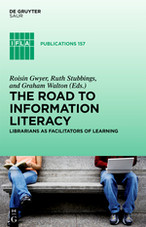
Picture of book cover
Some of the conference papers are published in this book.
Eileen discovered a gap, which none of the journals mentioned above has adequately addressed so far, which is "human resource development for teaching and teaching management". She encouraged attendees to research and  publish with Emerald.

I personally enjoy the CPDWL conferences most as they tie in with my research interests, but it was great to get a insight into what the IL section is doing. Many presentations showed the existing overlap between the two fields - indeed, it could be argued that they are intrinsically linked!

For photos and further information check out the satellite website. The presentations will be available soon. You might also be interested in the conference proceedings which have been published and include 20 papers.


15 Aug 2012

Terms of Service; Didn't Read

I came across this excellent project via Helen Wybrants: Terms of Service; Didn’t Read. ToS;DR provides an at-a-glance overview of the conditions and permissions attached to some of the most popular TOS agreements (I am sure I am not the only one who clicks the ‘agree’ button without thinking most of the time :))

The class ratings, icons and colour-coding system flag some serious concerns regarding user data and privacy, some of which have no doubt been overlooked by many when registering. These include the remarkably prevalent ‘No right to leave the service’ condition and Twitpic's right to take credit for your content.