Showing posts sorted by relevance for query wikipedia. Sort by date Show all posts

5 Sept 2012

Is Wikipedia up to the job?

If you use the Internet, you know and likely love Wikipedia. But have you ever asked yourself how reliable an effectively "crowd-sourced" information point is? Epic, a bespoke e-learning company, and the University of Oxford recently released their comparative pilot study on the efficacy and integrity of content published by Wikipedia. A sample of 22 Wikipedia English-language articles was compared to corresponding articles in Encyclopaedia Britannica. The study also looked at Spanish Wikipedia vs. Enciclonet and Arabic Wikipedia vs. Arab Encyclopaedia.


Source: Wikipedia.org

Before I go into the report’s findings itself, here’s a brief re-cap of how Wikipedia operates and what its chief English-language competitor – Encyclopaedia Britannica – thinks.

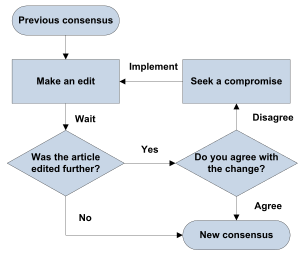
Anyone with access to the Internet is encouraged to contribute. Readers of Wikipedia items “can edit the text as he or she sees fit, anonymously or with a user account” (Wikipedia, 2012). How does this work in practice? Wikipedia operates around the concept of consensus editing based upon open-community derived policies and guidelines. The fundamentals are summarised in the form of five pillars as follows: Wikipedia is an encyclopaedia; Wikipedia is written from a neutral point of view; Wikipedia is free content that anyone can edit, use, modify, and distribute; editors should interact with each other in a respectful and civil manner; Wikipedia does not have firm rules.


Source: Wikipedia.org

The last point of “no firm rules” is important in the sense that entries on Wikipedia revolve around the idea of an open dialectic. Knowledge creation through Wikipedia is open for all, under continuous scrutiny and subject to active stress testing by anyone out there engaging with the subject matter at hand.

Compare this approach to Britannica, where contributions are exclusively received from commissioned experts and scholars. Entries are subject to tight editorial control.

For obvious reasons (such as the lack of disciplined editorial review and the fact that entries can be made by anyone), Britannica vehemently disputes the idea that Wikipedia should be considered a viable alternative as suggested by Nature back in 2005. Nature’s study looked at 42 pairs of scientific articles from Wikipedia and Encyclopaedia Britannica respectively, all of which were of similar length representing broad disciplines (see details of how the survey was conducted). Each pair of selected entries was reviewed by experts who looked out for factual errors, critical omissions and misleading statements. 123 were found out for Britannica, 162 for Wikipedia. Based on those results, Nature argued that Wikipedia comes close to Britannica in its coverage of scientific topics.

Britannica criticised Nature’s findings as fatally flawed based on the argument that its methodological approach and conclusions were unsound (you can read the full demolition of Wikipedia by Britannica here). In return, Nature dismantled Britannica’s charge of flawed analytics in a point-by-point rebuttal (see here).

Assessing the veracity of Wikipedia, which in essence is the embodiment of an inclusive social project built around the idea of empowering an open, knowledge-based society, is complex and by no means a simple task. That’s why Epic/Oxford decided to repeat the exercise, albeit using a more complex methodological approach.

The Epic/Oxford pilot study (2012) aims to:
  1. Explore the opinion of expert reviewers regarding attributes relating to the accuracy, quality and style of a sample of Wikipedia entries across a range of languages and disciplines.
  2. Compare the accuracy, quality, style, references and judgment of Wikipedia entries as rated by experts to analogous entries from popular online alternative encyclopaedias in the same language.
  3. Explore the viability of the methods used in respect of the first two aims for a possible future study on a larger scale.
Emphasis is put on testing a methodological approach that will stand up to scrutiny as the foundation for a large scale study. For this purpose, a special feedback tool was devised that provides reviewers (all experts in their respective scientific fields) with a wide range of quality criteria, drawn from extensive previously published research (Epic/Oxford, 2012). A sample of twenty-two articles was subject of this pilot study; five dimensions for assessment were devised: i) accuracy, ii) references, iii) style/ readability, iv) overall judgment (including citability), v) overall quality score.

The bottom line is that the pilot indicates that Wikipedia scores rather well in relation to the majority of the five variables above when compared to rival encyclopaedic entries. However, considerable challenges were noted concerning the identification of appropriate articles fit for comparison, anonymising articles, and recruiting a sufficient range of suitable reviewers if a large scale study was to be embarked upon (Epic/Oxford, 2012). For this reason, Epic/Oxford recommends that more research could be done on how users interpret and make sense of content from online encyclopaedias in general and from Wikipedia in particular (Epic/Oxford, 2012).

This conclusion is an important one as it highlights the complexities involved in objectively assessing crowd-sourced information points, such as Wikipedia. This important pilot also opens up the discussion on the validity of information and research acquired via non-traditional means. Despite the challenges noted above, is it time for academic and perhaps commercial content producers to start re-assessing their guarded relationship with Wikipedia compared to their open embrace of commercial alternatives?

See also Konieczny's Wikis and Wikipedia as a teaching tool: Five years later

13 Mar 2013

Taking Libraries to Wikipedia / Wikipedia to Libraries

Guest Post by Gerard Gregory 

Wikipedia is very open about its lack of credibility as an authoritative source. Libraries sing from the same hymn sheet, but in doing so often seem to unnecessarily distance themselves from or appear antagonistic towards the resource. The reality is that libraries and Wikipedia share very similar goals around providing public access to content. Wikipedia presents real opportunities for Irish libraries, and new developments in the world of Wikipedia could potentially increase the level of public engagement with library collections. They could also help improve basic research skills and even provide professional development prospects for unemployed graduates who might be locked in the unforgiving cycle of being unable to get a job without relevant experience.

John Mark Ockerbloom, a digital library architect and planner at the University of Pennsylvania. has developed an experimental service for Wikipedia pages called Forward to Libraries that allows you to click from a Wikipedia article to related resources on a library catalogue. The “Resources in your library” links will perform a keyword or an author search of the library catalogue of your choice using authority-controlled headings. Users can register their preferred library (which will set a cookie in their browser recording that choice), or select it for each individual search. The documentation for the Library resources box template is online. From a user’s perspective the registration feature would benefit if it was more like the Library Links option in Google Scholar which personalises your Scholar results much more seamlessly and links to up to five library collections, but on the whole this addition to Wikipedia is a really innovative way of connecting the hundreds of millions of people who consult Wikipedia every month to libraries. It might still be in an experimental stage but the opportunities for Irish libraries are quite clear. Once a library is registered people in the locality will be able to link to the library catalogue from a Wikipedia page of interest. Onsite or on-campus browsers could pre-install the cookie and default to the library when a user follows one of the links.

The Forward to Libraries project is not the only project that connects Wikipedia with libraries. The GLAM-WIKI project introduced the idea of the Wikipedian in Residence. GLAM stands for Galleries, Libraries, Archives and Museums but the project also incorporates other cultural institutions such as theatres, zoos, botanical gardens, public broadcasters etc. A Wikipedian in Residence is a person who dedicates time to working in-house at an organisation and, amongst other things, facilitates content improvement in partnership with the organisation and the Wikipedia communities. In their profile of the work undertaken by Liam Wyatt, the Wikipedian in Residence at the British Museum in 2010, The New York Times wrote that “in today’s Wikipedia there is renewed value in old-fashioned expertise, whether to provide obscure details to articles that have already been carefully edited or to find worthy topics that haven’t been written about yet”. Librarians are well positioned to offer such expertise.

A very original example of work done by Wikipedians in Residence is the VIAFbot project coordinated by the OCLC Research Wikipedian in Residence Max Klein and the British Library Wikipedian in Residence Andrew Gray. The VIAFbot linked authority file records to biographies on Wikipedia. You can see the VIAFbot at work and watch Max Klein discuss the project here. You may have already seen the Authority Control links paced at the bottom of Wikipedia articles by the VIAFbot over the last few months.

Wikipedian residencies need not be as technical as the VIAFbot project. A project could involve creating Wikipedia content to include articles on topics or items from a collection that so far have not been contributed to Wikipedia or it could involve putting Forward to Libraries links into high profile articles using either library activity data or Wikipedia statistics as a guide. You could also use the case studies from completed projects available on Wikipedia for direction. To my knowledge there have been no Wikipedians in Residence in Ireland. This means that there could be opportunities for recent graduates here to proactively develop a residency idea and try to work as interns or volunteers in any type of GLAM organisation. The British Museum residency, the very first of its kind, was self-initiated. The level of engagement with Wikipedia by high-profile organisations ought to get Irish organisations curious at least.

If traditionally the problem with Wikipedia has been its amateurism and unreliability then the inroads made by the likes of the VIAFbot project in applying authority control and the Forward to Libraries project in bringing library catalogues into articles mean that the scepticism of some librarians towards Wikipedia is becoming increasingly harder to defend. Libraries need to be where people will use them and these types of projects are really great ways of doing that.

*Guest blog posts represent the personal views of the poster and do not represent the official opinions or commentary of libfocus.com

Posted on Wednesday, March 13, 2013 | Categories:

18 Apr 2013

Item-level linking between Wikipedia entries and IR content

We previously wrote about the popularity of Wikipedia and how libraries are beginning to embrace the idea of capitalising over this fact. Well, here is another clever digital-collections outreach exercise, which very effectively helps spread the news about, and encourages the usage of, carefully chosen open access institutional repository assets and related IR collections.

Ball State University Digital Media Repository decided to utilise Wikipedia as a gateway to increase the visibility of their collection on a global scale, and they did so with great effect. Rather than linking on a collection level, Ball State decided to drill down and connect selected Wikipedia entries to 40 individual repository items from their Hague Sheet Music Collection between July and September 2011. The consequence of item-level linking in this instance enables Wikipedia users to investigate further as they are now able to directly access a specific resource that is likely to be of relevance to them.

Linking to records from Wikipedia had a considerable effect on user traffic to the Ball State’s repository service. In the year before the link-up, those 40 assets had 1,824 pageviews. One year on and they had attracted a total of 12.956 views – a 610.31% increase. 9,824 of those pageviews originated from Wikipedia. 

Source: Wikipedia
A specific example that highlights the effectiveness of utilising Wikipedia as an entry point and digital outreach tool is a link to the digitised version of the sheet music for “It’s a Long Way To Tipperary” (see the first external link from the Wikipedia entry here).

Before linking from Wikipedia, the item received 4 pageviews, whereas 12 months afterwards it received 640 representing an increase of 15.900% in traffic. 582 of those views were sourced from Wikipedia.

As a side effect of linking from Wikipedia, overall traffic to the Hague Sheet Music Collection tripled between January 2011 and September 2012.

Such figures certainly provide food for thought as to how one’s own IR could potentially benefit from item-level linking from popular digital information services, such as Wikipedia.

Many thanks to Padraig Stack for pointing out this case study in the first place.

Ref.
Szajewski, M, 2013. Using Wikipedia to Enhance the Visibility of Digitized Archival Assets. D-Lib Magazine, [Online]. Volume 19, Number 3/4, 6. Available at: http://www.dlib.org/dlib/march13/szajewski/03szajewski.html [Accessed 01 April 2013].

18 Jan 2015

The Impact of Print Media and Wikipedia on Citation Rates of Academic Articles

Guest post by Daniel Price. Daniel lives in Israel, has an MA in Library and Information Science from Bar Ilan University, and works as a librarian at Shalem College in Jerusalem.

There is a clear desirability to publish a paper that has a strong scholarly impact, both for personal satisfaction knowing that one’s research has been viewed and built upon, and for professional reasons, since the number of citations a paper can correlate to promotion and tenure - the ubiquitous “publish or perish” (Miller, Taylor and Bedeian, 2011), which has now become an international phenomena (De Meis, Leopoldo, et al, 2003; De Rond and Miller, 2005; Min, Abdullah and Mohamed, 2013; Osuna, Cruz-Castro and Sanz-Menéndez, 2010; Qiu, 2010; Rotich and Muskali, 2013), increased salary and external funding (Browman and Stergiou, 2008; Diamond, 1986; Gomez-Mejia and Balkin, 1992; Monastersky, 2005; Schoonbaert and Roelants, 1996) and even the chance of winning professional prizes such as a Nobel Prize (Pendlebury, 2013).

Understandably then many studies have been carried out to discover the characteristics of highly cited papers (Aksnes, 2003) and the factors that influence citation counts. It is widely accepted that it is not just the quality of the science that affect the citation rate, but bibliometric parameters of papers such as its length (Abt, 1998; Ball, 2008; Falagas et. al. 2013; Hamrick, Fricker and Brown, 2010), number of references (Corbyn, 2010; Kostoff, 2007; Vieira and Gomes, 2010; Webster et. al., 2009), number of authors (Aksnes, 2003; Borsuk et. al., 2009; Gazni and Didegah, 2011; Wuchty et al., 2007), length of titles (Habibzadeh and Yadollahie, 2010; Jacques and Sebire, 2010), colons in titles (Jamali and Nikzad, 2011; van Wesel, Wyatt & ten Haa, 2014; Rostami, Mohammadpoorasl, and Hajizadeh, 2014).

A variety of external considerations is also known to influence the citation rate of academic papers. Intuitively a paper that has been publicised in the popular print media will be cited more as its publicity makes researchers more aware of it; however it can be argued that quality newspapers only cite valuable articles that would garner a significant number of citations in any case. That the first assumption was true was proven thirteen years ago in 1991 by comparing how many more citations articles published in the New England Journal of Medicine received if they were quoted in the New York Times during a 12 week period in 1978 when copies of the paper were printed but not distributed due to a strike compared to the following year of 1979. The results showed that articles covered by the Times received 72.8% more citations during the first year after their publication but only those discussed when the paper was actually distributed. Articles covered by the Times during the strike period received no more citations that articles not referenced by the Times, thus proving that exposure in the Times is a cause of citation (“the publicity hypothesis”) and not a forecast of future trends (the “earmark hypothesis”) (Phillips, 1991).

Phillips’ findings articles that covered in the New York Times receive more citations was confirmed in another study conducted 11 years later which also found however that exposure in less “elite” daily newspapers (but not in evening broadcasts of mainstream USA television networks) during a twelve month period from mid-1997 to mid-1998 also correlated with higher citation rates of a wider range of scientific papers, thus showing that scientific communication is not just carried out through elite channels. Importantly though, the author notes that his study does not prove the “publicity hypothesis” as the articles that were publicised could have been more intrinsically important and were only cited for this reason, although it does cast doubt on the “earmark hypothesis” since many articles that were not mentioned were cited (Kiernan, 2003).

In the present day much scholarly communication takes place on Web 2.0 tools and in the emerging field of “altmetrics” (Konkiel, 2013; Priem, 2014; Thelwall, 2013), studies focus on parametrics including whether it has been cited and discussed on academic blogs (Shema, Bar-Ilan and Thelwall 2014), tweeted (Eysenbach, 2011), and uploaded to a social media platform such as Mendley (Li and Thelwall, 2012).

Research has also investigated whether articles cited on the decidedly non-elitist Wikipedia. A study conducted in the beginning of 2010 found that 0.54% of approximately nineteen million Wikipedia pages cited a PubMed journal article, which corresponds to about 0.08% of all Pubmed articles. The researchers showed that journal articles that were cited in Wikipedia were cited more and had higher F1000 scores than a random subset of non-cited articles, a phenomenon they explained according to their hypothesised that Wikipedia users would only cite important articles that present novel and ground-breaking research (Evans and Krauthammer, 2011).

A larger study carried out two and half years later came to the same conclusion that academic papers in the field of computer science which are cited on Wikipedia would be more likely to be cited because the Wikipedia entries are written by talented authors who are careful to cite reputable authors and trending research topics (Shuai, Jiang, Liu and Bollen, 2013).

These conclusions support the “earmark hypothesis” that Phillips rejected and Kiernan doubted. Wikipedians are credited with identifying high impact journal articles soon after they are published and recommending them to other users.

In order to preserve a careful dialectic of both sides of the publicity/earmark hypotheses though, the possibility should be entertained that the large number of Wikipedia users may include researchers who, flooded with an information overload of thousands of articles, are motivated to read and quote certain articles because they saw them quoted on Wikipedia. Future research could investigate the information behavior of a large number of researchers, specifically their use of Wikipedia.

Bibliography:
Abt, H. A. (1998). Why some papers have long citation lifetimes. Nature, 395, 756-757.

Aksnes, D. W. (2003). Characteristics of highly cited papers. Research Evaluation, 12(3), 159-170.

Ale Ebrahim, N., Salehi, H., Embi, M. A., Habibi Tanha, F., Gholizadeh, H., Seyed Mohammad, M., & Ordi, A. (2013). Effective strategies for increasing citation frequency. International Education Studies, 6(11), 93-99.

Ball, P. (2008). A longer paper gathers more citations. Nature, 455(7211), 274-275.

Borsuk, R. M., Budden, A. E., Leimu, R., Aarssen, L. W., & Lortie, C. J. (2009). The influence of author gender, national language and number of authors on citation rate in ecology. Open Ecology Journal, 2, 25-28.

Browman, H. I., & Stergiou, K. I. (2008). Factors and indices are one thing, deciding who is scholarly, why they are scholarly, and the relative value of their scholarship is something else entirely. Ethics in Science and Environmental Politics, 8(1), 1-3.

Corbyn, Z. (2010). An easy way to boost a paper's citations. Nature. Available at http://dx.doi.org/10.1038/news.2010.406

Evans, P., & Krauthammer, M. (2011). Exploring the use of social media to measure journal article impact. In AMIA Annual Symposium Proceedings (Vol. 2011, p. 374). American Medical Informatics Association.‏

Eysenbach, G. (2011). Can tweets predict citations? Metrics of social impact based on twitter and correlation with traditional metrics of scientific impact. Journal of Medical Internet Research, 13(4).

Falagas, M. E., Zarkali, A., Karageorgopoulos, D. E., Bardakas, V., & Mavros, M. N. (2013). The impact of article length on the number of future citations: a bibliometric analysis of general medicine journals. PloS one, 8(2), e49476.

Gazni, A., & Didegah, F. (2011). Investigating different types of research collaboration and citation impact: a case study of Harvard University’s publications. Scientometrics, 87(2), 251-265.

Gomez-Mejia, L. R., & Balkin, D. B. (1992). Determinants of faculty pay: an agency theory perspective. Academy of Management Journal, 35(5), 921-955.

Habibzadeh, F., & Yadollahie, M. (2010). Are shorter article titles more attractive for citations? Crosssectional study of 22 scientific journals. Croatian medical journal, 51(2), 165-170.

Hamrick, T. A., Fricker, R. D., & Brown, G. G. (2010). Assessing what distinguishes highly cited from less-cited papers published in interfaces. Interfaces, 40(6), 454-464.

Jacques, T. S., & Sebire, N. J. (2010). The impact of article titles on citation hits: an analysis of general and specialist medical journals. JRSM short reports, 1(1).

Jamali, H. R., & Nikzad, M. (2011). Article title type and its relation with the number of downloads and citations. Scientometrics, 88(2), 653-661.
Kiernan, V. (2003). Diffusion of news about research. Science Communication,25(1), 3-13.

Konkiel, S. (2013). Altmetrics: A 21st‐century solution to determining research quality. Online Searcher, 37(4), 10‐15.

Kostoff, R. N. (2007). The difference between highly and poorly cited medical articles in the journal Lancet. Scientometrics, 72(3), 513-520.

Li, X., & Thelwall, M. (2012). F1000, Mendeley and traditional bibliometric indicators. In Proceedings of the 17th International Conference on Science and Technology Indicators (Vol. 2, pp. 451-551).

Monastersky, R. (2005). The number that’s devouring science. The chronicle of higher education, 52(8), A12.

Osuna, C., Cruz-Castro, L., & Sanz-Menéndez, L. (2011). Overturning some assumptions about the effects of evaluation systems on publication performance. Scientometrics, 86(3), 575-592.
Phillips, D. P., Kanter, E. J., Bednarczyk, B., & Tastad, P. L. (1991). Importance of the lay press in the transmission of medical knowledge to the scientific community. The New England Journal of Medicine, 325(16), 1180-1183.

Price, D. (2014). A bibliographic study of articles published in twelve humanities journals. Available at https://www.academia.edu/7820799/A_Bibliographic_Study_of_Articles_Published_in_Twelve_Humanities_Journals

Priem, J. (2014). Altmetrics. In B. Cronin and C. R. Sugimoto (Eds.) Beyond bibliometrics: harnessing multidimensional indicators of scholarly impact (pp. 263-287).

Rostami, F., Mohammadpoorasl, A., & Hajizadeh, M. (2014). The effect of characteristics of title on citation rates of articles. Scientometrics, 98(3), 2007-2010.

Schloegl, C., & Gorraiz, J. (2011). Global usage versus global citation metrics: the case of pharmacology journals. Journal of the American Society for Information Science and Technology, 62(1), 161-170.
Schoonbaert, D., & Roelants, G. (1996). Citation analysis for measuring the value of scientific publications: quality assessment tool or comedy of errors? Tropical Medicine & International Health, 1(6), 739-752.

Shema, H., Bar‐Ilan, J., & Thelwall, M. (2014). Do blog citations correlate with a higher number of future citations? Research blogs as a potential source for alternative metrics. Journal of the Association for Information Science and Technology.

Shuai, X., Jiang, Z., Liu, X., & Bollen, J. (2013). A comparative study of academic and Wikipedia ranking. In Proceedings of the 13th ACM/IEEE-CS joint conference on Digital libraries (pp. 25-28).

Thelwall, M., Haustein, S., Larivière, V., & Sugimoto, C. R. (2013). Do Altmetrics Work? Twitter and Ten Other Social Web Services. PloS one, 8(5), e64841.

van Wesel, M., Wyatt, S., & ten Haaf, J. (2014). What a difference a colon makes: how superficial factors influence subsequent citation. Scientometrics,98(3), 1601-1615.
Vieira, E.S., & Gomes, J.A.N.F. (2010). Citation to scientific articles: Its distribution and dependence on the article features. Journal of Informetrics, 4 (1), 1-13.

Webster, G. D., Jonason, P. K., & Schember, T. O. (2009). Hot topics and popular papers in evolutionary psychology: analyses of title words and citation counts in evolution and human behavior, 1979–2008. Evolutionary Psychology, 7(3), 348-362.

Wuchty, S., Jones, B. F., & Uzzi, B. (2007). The increasing dominance of teams in production of knowledge. Science, 316(5827), 1036-1039.

14 Sept 2021

Preserving our cultural memory in the digital age

Libfocus is very happy to post the second of the highly commended posts in the 2021 CONUL Library Assistant Awards.  Congrats to Stewart Killeen of TU Dublin (City Centre) Library


Recently, I had the great pleasure of watching Recorder: The Marion Stokes Project, Matt Wolf’s documentary film on the life and work of Marion Stokes. Marion Stokes was an African-American civil activist, who besides tirelessly engaging the broad spectrum of American public opinion through public-access television, also took a key interest in technology with all of its political and social implications (Wikipedia, 2021). Her visionary enthusiasm for the new media and technologies which developed throughout the twentieth century and her commitment to democratic values culminated in her astonishing collection of recorded television news footage, spanning a period of 35 years from 1977 until her death in 2012 (Wikipedia, 2021). Her collection, which is now in the care of the ambitious Internet Archive project, consists of 140,000 VHS tapes, and it provides a record of televised news covering many of the seminal events that marked the close of the previous millennium and the beginning of a new one (Wikipedia, 2021). 

Courtesy of the BBC 

It was surely of no little significance to the legacy that Marion Stokes left that for much of her professional life she worked as a librarian with the Free Library of Philadelphia (Wikipedia, 2021). Indeed, in my own short time working as a Library Assistant with Technological University Dublin and through my studies on the MSc in Information and Library Management with Dublin Business School, I have come to appreciate the fragility of our shared cultural record as it is brought to life in a digital world. 


With the arrival of the internet and the explosion of digital technologies that has accompanied it, information professionals have faced both new challenges and opportunities in the curation of information. Traditionally the preserve of librarians and scholars, the digital turn has opened up the domains of human knowledge like never before, offering  “fast facts” to our fingertips (Kavanagh and O’Rourke, 2016, p.4; Rowlands et al., 2008, p.293). In some sense we have all become librarians today, as we access, monitor, and create large volumes of content to be shared and distributed across a wide variety of public platforms. The democratisation of information has undoubtedly improved the individual and collective lives of many, but it has not come without risk. The greatest danger it seems is the tendency to assume that the sheer volume of digital information available is a guarantee of its future sustainability and accessibility. One need only consider the historical and cultural significance of the Marion Stokes collection, however, to appreciate the tenuousness of such an equation. 


As far back as 2003, Clifford Lynch, one of the founding members of the Coalition for Networked Information (CNI), warned of the potential threats to cultural preservation in a digitally-driven economy (Lynch, 2003, p.149). In his paper, The Coming Crisis in Preserving our Digital Heritage, Lynch outlined how developments in intellectual property law, the dynamics of market forces and the technologies involved in maintaining digital information across sustained periods of time may conspire to “create a crisis in our ability to preserve our cultural heritage as this heritage increasingly migrates into digital formats” (Lynch, 2003, p.150). 


Lynch singled out as particularly worrisome the changing terms of availability that increasingly characterise the digital economy where, rather than paying to obtain copies of a given work consumers instead pay to experience these works (Lynch, 2003, p.151). This has in fact become the norm with many of today’s biggest information providers offering a large class of “ephemeral”, “transient,” and “experiential” products in return for a subscription cost (Lynch, 2003, p.151). However, should we choose to abdicate our responsibility for cultural preservation to intermediaries whose primary concern is not the “long-term preservation of the cultural record” we may, as Lynch suggests, run the risk of losing a considerable and vital part of that record (Lynch, 2003, p.151). 


Courtesy of the Haiti Trust Digital Library 


What can be done to avoid such an outcome? 

The success of libraries in supporting digital scholarship within the academic community offers a possible solution. With their expertise in “contextualising information”, their knowledge of metadata creation and their commitment to long-term access, librarians have been instrumental in helping create digital objects that are sustainable in the long-term (Burns, 2016, p.246). Moreover, librarians play a key role in the cultivation of skills that are essential to responsible and effective information management, i.e., information literacy, and there is a growing recognition of the need to cultivate a “digital mindset”, one which inculcates a deeper understanding of the implications of our digital culture (Kavanagh and O’Rourke, 2016, p.7). As Kavanagh and O’Rourke (2016, p.5) have argued, the “truly digital literate person is one who moves beyond passively absorbing information to actively participating in its creation.” By instilling both the skills and appreciation for the creation of sustainable digital objects it is perhaps possible to save some of the digital heritage we will leave to future generations. In doing so we will honour not only our own legacy but also that of Marion Stokes. (777) 


Courtesy of the National Orientation Agency 


Recommended Resources: 

A guide to personal archiving by the Library of Congress
A quick guide to Personal digital archiving by the Digital Preservation Coalition 

How to preserve your digital memories: Sara Day Thomson gives lecture on ‘Personal Digital Archiving’ by the Digital Repository Ireland 

Personal Digital Archiving: the basics by Purdue University Library 


References 

Burns, J.A., 2016. Role of the information professional in the development and promotion of digital humanities content for research, teaching, and learning in the modern academic library: An Irish case study. New Review of Academic Librarianship, 22(2-3), pp.238-
248. https://doi.org/10.1080/13614533.2016.1191520 


Kavanagh, A. and O'Rourke, K. C. (2016) Digital Literacy: Why It Matters. Available at: https://arrow.tudublin.ie/ltcart/37/ (Accessed: 16 July 2021) 


A. Lynch (2003) Chapter 18. The Coming Crisis in Preserving Our Digital Cultural Heritage, Journal of Library Administration, 38:3-4, 149-161, https://doi.org/10.1300/J111v38n03_04 (Accessed: 16 July 2021) 


Rowlands, Ian et al. (2008). The Google generation: The information behaviour of the researcher of the future. Aslib Proceedings. 60. 290-310. 10.1108/00012530810887953 (Accessed: 16 July 2021) 


Wikipedia (2021) ‘Marion Stokes’. Available at: https://en.wikipedia.org/wiki/Marion_Stokes (Accessed: 15 July 2021


15 Jun 2016

Is a Once Hidden Culture Still Hidden Away in Boxes? The Irish Queer Archive and The National Library

Guest Post by Mark Ward (Please note, that all views are my own and not representative of any organisations)
Eight years ago today, on the 16th June 2008, the Irish Queer Archive (IQA), “a vast collection of material which provides interesting and valuable insights into the social history of lesbians and gay men in an Irish and international context over a thirty-year period”[1], was donated by the National Lesbian and Gay Federation of Ireland to the National Library of Ireland (NLI).

In 2009, a 157 page collection list detailing its fascinating contents was released by the NLI[2].

And then, nothing.

I kept waiting for the National Library to mount an exhibition of the archive, but they never did. Why?

The archive’s Wikipedia page talks about how “the historic transfer of IQA to NLI was also hugely symbolic as it signalled the Irish state taking ownership of LGBT heritage”[3] and states that digitisation of the entire collection is an aim. The IQA has a semi-active Facebook page[4] where a number of items have been photographed and shared along with historical information which gives a fascinating insight into the wealth of the material in the archive. I am under the impression that this endeavour, however, is not coming from the NLI but from historians associated with the IQA.

Tonie Walsh, member of the IQA group, historian, DJ and founding editor of Gay Community News (GCN), has done much to keep the flag of the IQA flying, giving talks and staging exhibitions using copies of materials from the IQA. For example, his exhibition, A Liberating Party: LGBT Pride in Ireland Since 1974, has toured all over the country, visiting places such as Clonmel, Arklow, Waterford and South Dublin (full disclosure: A Liberating Party visited Tallaght Library in 2010, and Ballyroan Library in 2013, both of which I organised). Accompanying this, and all of his exhibitions, is Everybody’s Diary, a ledger of Pride Testimonials which has been travelling the country since 2003 and will continue touring until full, and then be added to the IQA – crucially, the IQA is a living archive that is continually accepting donations.

As is evident from the above, Walsh is a powerhouse in getting the IQA out there, but he is only one man. The NLI have not mounted a single exhibition of the IQA in the eight years that they have had it. And they do mount exhibitions, frequently it seems, not only ones in the NLI itself or in their National Photographic Archive, but they also have travelling and online exhibitions. Frustratingly, there have been events at the NLI which, arguably, would’ve been a perfect opportunity to include IQA exhibits, such as a Marriage Equality event in the NLI in 2013[5] or a BeLonG To Youth Services Photographic Exhibition in 2014 in the NLI’s National Photographic Archive[6]. Currently, there is no NLI-led exhibition of the IQA, and none seems to be forthcoming. This despite the fact, according to Wikipedia that “an advisory group (…) continues to focus on opportunities to help the National Library of Ireland exploit its collection”[7] – if this is the case, why hasn’t an exhibition been mounted? Are the National Library actively collaborating with this advisory group?

Furthermore, despite the aim mentioned earlier that the NLI would be “ultimately digitising the entire collection”[8], nothing of the IQA appears to have been digitized by the NLI and there is no mention anywhere of any such digitization project happening at any point in the future.  

Searching deeper, even their blog, which began in July 2011, began first with a news post announcing that it was beginning, and in which they posted a list of suggested posts that could be featured on the blog, of which the IQA was one. Almost five years later, and the NLI has not even made an informative blog post regarding the IQA. A blog post that does mention it is a now defunct Irish History Blog, Pue’s Occurances, on which, in 2009, their contributor Ciarán Wallace wrote about the IQA at the NLI stating that “much of the history of late-twentieth century Ireland can be traced through this archive”[9].

More recently, in December 2015, The Christopher Robson Photographic Collection – a collection of 2000 photographs taken at “pride events in Ireland between 1992 and 2007”[10] by the late Robson, a founding member of the Gay & Lesbian Equality Network, was donated to the NLI. I do hope that the new acquisition of the Robson collection – which sounds like it would make a wonderful exhibit - doesn’t succumb to the same fate that appears to have befallen the IQA.

With all of this in mind, my question to the National Library is twofold. Firstly, why are you not fully exploiting this wonderful resource of the Irish Queer Archive? And secondly, if not now, then when? Whilst it is fantastic that the IQA is at the NLI and can be consulted, the history of my community – an archival history that was painstakingly assembled and collected by a dedicated group over decades – deserves better than languishing in closed stacks. As we approach, and almost pass-by another Pride, is it too much to hope for our history to be put on display in the form of a large-scale exhibition and/or a digitized online collection? At this stage, I’d even settle for the promised NLI blog post…

[Postscript: I welcome a response, or a dialogue, with the NLI about this issue.]

24 May 2013

Report on UKSG 2013, Bournemouth, UK -- Part 2

Guest post by Anne Madden

Key themes:
UKSG 2013 was apparently the biggest yet. With 930 delegates, the organising committee are very restricted in the venues open to them. Bournemouth and the Bournemouth International Centre (BIC) proved acceptable and accessible and will be recycled for 2016. In particular, the sponsor hall was well laid out and worked very well (see pics below). Getting to a workshop did occasionally involve a bit of advanced navigation though.

Part 1 of the report is available here

This (final) part covers the following themes:
  • Our clients under the microscope
  • The role of Technology

Our clients under the microscope
I have to start this section with the outstanding presentation by Josh Harding – a self-confessed “paperless student”. Josh is a post-grad medical student; in his earlier student days, he was a book and paper-bound stereotypical student. This time round, the Tablet has set him free. He requires “lots of information, very quickly, very efficiently”. The iPad in combination with a carefully selected set of apps now meet all his information needs.  Not only is it more practical but by allowing searching and switching across all types of content from notes to texts to lectures, it also adds enormous value in terms of speed and efficiency. He predicts it will be the norm among students within 18 months, and wondered whether we the information providers would be ready.

He proceeded to list the tools and resources he would use in a typical day. As they are very discipline- (and iPad) specific, I won’t list them here but I think his presentation is recommended viewing  not just to those in healthcare but to anyone providing services to students of any description.

Some generic apps include Notability, Inkling and GoodReader. He is a fan in particular of Inkling, a “(relatively) smart” interactive textbook source which allows per chapter download. As far as eBooks are concerned, in his view it’s a case of “a lot done, more to do” – smart should mean “adaptation based on learning analytics”. His textbook of the future would record his progress, identify any weaknesses – as well as applaud his successes, compare his performance with that of his peers and allow him to adapt the content to his needs (based on e.g. the amount of time he spends on the different chapters).

Notability is the handwriting app he uses, and into it he pulls his eBooks, lecture notes and other resource apps so that he can add his notes and links. These are then sent to the Cloud in PDF format where he can later access them using GoodReader. Obviously connectivity is key to making this all work and central to this is cloud storage.

The Librarian’s role is to identify how to deliver these services to our students, making students aware of what’s available and how to both access and use it effectively. He suggests that using “early adopter” students to advise their peers may be a way of achieving this. A major challenge is costs – in the same way as core paper textbooks and resources could be loaned from the library, in the future the digital equivalent should be equally freely available. Other challenges include fragmentation – multiple platforms, multiple apps and variable quality; PDFs with DRM restricting their use with 3rd party apps.

This said, his wish list not surprisingly included:
  • Single platform, single source for textbooks which would be smart and interactive.
  • Institutional subscription to core apps; however, students are willing to pay a fee if they feel they are getting what they want, in the format they want, at a reasonable price.

The following speaker should have been Sian Bane, discussing MOOCs but as she couldn’t make it, Ken Chad stepped into the breach and introduced the concept of "jobs to be done" (JTBD). This is the application of a commercial or business concept to the library world. Once you have carried out your user survey or /needs analysis, you then focus on meeting the unmet needs of your clients.

You focus on the “sweet spot”; ignore services that “competitors” can provide, stick within your capabilities, and wherever this intersects with an identified unmet customer needs you have found your niche. Focus on ends, not means: “Not quarter inch drills, quarter inch holes” (Theodore Levitt).  The jobs referred to in the title relate to jobs your users need to get done.

It was at this point that we were treated to the Spice Girls’ “I’ll tell you what I want, what I really really want” with special emphasis on the phrases “make it fast” and “don’t go wasting my precious time”. Citing Clayton Christensen, he suggested that students don’t want textbooks, they want to pass exams, preferably without ever having to open a textbook – that is the “JTBD”.

Introducing the JTBD method to your library, you need to identify 3 things:
1. What is the problem/job?
2. Who should solve it?
3. In what circumstances/scenario?

In conjunction with your clients, you need to establish:
- Why this problem is important to them
- How they are currently handling it
- Why they have chosen the solution they have chosen
- Their likes and dislikes of their chosen solution

Back at base, you then need to ask yourself:
- What do I already have that might work
- In what circumstances will it be effective
- Any weaknesses or strengths?
- Why will my clients use this, instead of what they are already doing?
- Does my solution address the full problem?

It may be that you need more context in order to fully understand the JTBD. It’s not just providing something that will fill a gap, your solution must add value or be seen as adding value by the client.

The next three presentations relate to recent user research studies, carried out by Lynn Silipigni Connaway of OCLC, Simon Inger of Renew Training and the interesting juxtaposition of Jo Alcock and Mark Brown of Birmingham City University who gave a lightning presentation.

Connaway looked at the “digital student”. They endorse both the Josh Harding and the Clayton Christensen view – the alternative title to her presentation was “I don’t think I have ever picked up a book out of the library to do any research – all I have used is my computer.”

They like Google “reliable and fast”, and Wikipedia. They believe the following:
- Libraries are quiet places with internet access.  They contain many print books.
- “If two sources say the same thing, then it is most likely the truth”

Student Nirvana would be to find a one stop shop for everything they need to pass their exams. Is this what we deliver? Not according to this research. Students don’t so much go to the Library web page as stumble across it through their preferred search-engine. They (and Faculty) may land on a Library page whose content is out of date and irrelevant, and not feel tempted to stay.

So, in the words of Ken Chad, what are the jobs to be done? Firstly, she suggests, digital students need digital librarians. The “Ask a Librarian” service should be more interactive and personalised. Customised help features should be triggered by scenarios that might otherwise make students turn away e.g. “no results” to their search.

She used the term “the inside-out Library” – i.e. if students are happening on Library pages and resources through generic search engines, then the library must recognise linking as a key role. In an inspired example of this, faculty are now adding key citations to Wikipedia articles as they know this will increase the chances of students spotting them. In general, students feel guilty about using Wikipedia – even while citing and using the references from a Wikipedia article, they rarely mention Wikipedia as the source, and even more rarely will they read these citations. Their behaviour is “squirrelling” – storing to read later, but later rarely comes.

Another key factor is lack of experience with databases and a lack of specialised search engines. The research showed that 62% of all researchers are self-taught. Mentor programmes are common in universities – providing training for mentors on research is a way of propagating awareness.

The lightning presentation by Alcock and Brown served up highlights from their recent survey on Discovery and healthcare students. The full report is available to view here and even based on their highlights it was obvious that their findings were very much in line with those of the other research surveys present.
  • Students get familiar with one particular database or search tool and use this for general searching
  • Their choice of search tool is usually scenario-specific
  • Google is used to “scope” a topic – to find buzz words which they then search in a peer-review database. This echoes findings from the NUIG breakout session on “simplifying the search experience”.
  • They showed a number of advanced searching skills such as the ability to transfer their searching skills across different databases; awareness of different databases and knew they could work with their results to e.g. limit them by date etc.

Again on the topic of content discovery but on a global scale, Simon Inger gave an overview in 20 minutes of what is obviously a very substantial piece of research: “How readers discover content in scholarly journals”. “Readers” referred to researchers, students and librarians and all had their own network of routes to content.

These routes are of interest to both librarians and publishers – different readers will, he suggests, carry different value. While different sets of analytics are available to publishers and librarians, neither has the full picture. The current research attempts to address this and is a repeat of similar research carried out in 2005 and 2008 but on a far wider scale with 19,000 respondents.

To be fully comprehensive, they wanted representation from all geographical locations, sectors and professions. Given the no. of responses, even a small percentage such as 1700 responses (9%) from the medical sector; 2,500 responses (13%) from students, is still a very significant cohort.

The research covered preferences in search engines, discovery tools, apps and devices – all of which could be analysed by sector, geographical location, profession etc. Superficially, most of the findings come as no surprise:
• Different disciplines arrive at content in different ways.
• Different reader groups arrive at content through different routes

A more in-depth analysis of the data provides more practical and translational results:
  • Social Sciences are more likely to link from a Library web page than any other sector
  • Linking from search results and from targeted email alerts is more popular in Medicine than other sectors
  • Social Sciences prefer journal aggregators (ProQuest/Ebsco) as a starting point in a search; however their most popular starting point is an academic search engine such as Google Scholar.
  • Medical sciences are more likely to use A&I database (PubMed)
Changes since 2005:
  • Library web pages show a fairly significant increase in usage as a starting point in search
  • Journal alerts are declining in popularity as a means of discovering recent articles in a field
  • Bookmarks to journal home pages are on the up
  • The biggest supporters of Library web pages in “search” are Education Research and Humanities; physics and other hard sciences are least likely to use them
Library subscribed discovery resources:
  • A&I resources almost twice as likely to be used in Life Sciences and Medicine than a library web page or full text aggregator; Humanities more likely to use full text aggregators
Google in preference to Google Scholar by subject area:
  • Google Scholar most popular in Social Sciences, Psychology and Education Research with all other subjects preferring Google.
  • Physics & mathematics showed the strongest leaning of all to use Google over Google Scholar.  “Google Scholar only covers academic material”.
Device used:
  • Desktops/laptops still most used across all sectors
  • Tablets and phones small but significant.  Most popular in the medical sector which supports Josh Harding’s experience.

While the results are interesting, understanding the underlying reasons for them is not clear. Do they match our own experiences? Is there a platform that can support all preferences?

“Simplifying the search experience” – a breakout session by Monica Crump and Ronan Kennedy of NUIG – fits neatly here. Armed with a new Library Discovery service (Primo Central), they set out to provide their users with a Library search interface second to none.

This was a very enlightening and engaging presentation; among the “Sacred Cows” to be sacrificed was the dedicated library group. They described how at times the Group itself became the focus rather than the issue it set out to resolve. Secondly, not everyone understands library terminology; “print locations” translates to a student as “where I can find printers”. Finally, selecting features for their pedagogical value is commendable but may just discourage usage.

Once the new interface was finalised to the satisfaction of the Group, it was launched and then followed up by a LibQual survey. They received mixed messages: “website is difficult to use” and “website is easy to use”. The LibQual survey was followed up by user observation studies to clarify the situation.

Some useful findings:
  • They ticked all the boxes that librarians like to tick.  Unfortunately these proved to be the wrong boxes
  • Librarians aim for perfection; users want “good enough”.  Or as Ken Chad would put it, can it just get the job done?
  • “You can please some of the people some of the time etc”.  You will sometimes need to make a radical change and plan to manage any consequences.
  • Just because your system is feature-rich does not mean you should use all of them. Less can be more.
  • Library training makes for better searchers
  • Channel the options – don’t offer them all on the one page.  E.g. Default: single search box, with, below, “More search options” button.
  • To get maximum buy-in, choose when to make any major changes (not to coincide with start of a new academic year).
  • As already mentioned in the Alcock/Brown presentation, Google is generally used to “set context” but once this is done, they move to the library-based resources.
  • Academics had a preference for “point and link” as opposed to locating through a search.
Having revamped the interface on the basis of feedback, they have now repeated the LibQual survey; however at the time of the Conference, the results were not yet available.

The final one in this section is a lightning presentation by Eric Hunter on a current awareness service for his users at the RCSI. The service was developed to address both the need for relevant information at point-of-need and cognitive overload. A number of different prototypes were tested and a bulletin created which contained links to the content online.

The process is very labour-intensive however and given staff shortages, it is not certain whether it is the best use of librarians’ time. The service is currently under evaluation.

The role of technology
 I must confess to a lack of familiarity with some of the acronyms so some of “the science bit” may have gone over my head. I’ve provided links to the presentations wherever they exist and have listed the highlights below.

Anyone involved in Library discovery technology should keep their eyes open for a joint UKSG/JISC study which attempts to identify knowledge gaps and best practice. Its title will be “Assessing the impact of Library discovery technology on content usage” and it is due out in September. UKSG acts as an “incubator” for projects according to Ed Pentz of Cross-Ref, an example would be the usage-factor which has now been moved to Counter.

Liam Earney discussed the topic of Knowledge bases. His main contention is that inaccuracies have crept into systems to the detriment of the information landscape. Some rather surprising examples include the fact that few publishers have a complete and accurate list of all their publications. Equally, ISSNs are sometimes missing or inaccurately portrayed in journals. He made the catchy remark: “set your data free….. but please tidy it up and make it presentable first”!

He spoke of two products which have been developed to capture the information required to manage e-resources: KB+ and GOKb, both available under open licence. Duplication of effort needs to be avoided – only minor points of differentiation exist between the four largest knowledge bases. The focus should instead be on: open data (to ensure one single accurate version is in circulation), collaborative communities (again to avoid duplication and encourage sharing of metadata and data), enriched information (incorporating human awareness) and standards/best practice guidelines – too many too varied. Some of the partners in the project: KBart, Editeur, PieJ.

The aim of this project, as in many of the others in their own way, is interoperability.

The Journal Usage Statistics Portal (JUSP) and how it is used by the Open University. JUSP collects Counter statistics that are SUSHI compliant. It also gives you options to “interrogate the content” in a number of ways in order to assist in renewal decisions for example. The benefits of using one interface as opposed to multiple publisher platforms, is obvious. Other usage includes subscription negotiations based on price per use; assessing the value of “big deals”, it can also be used to indicate trends in usage. Nesli 1 & 2 publishers currently participate while others have been contacted and asked to do so.

Also from the Open University is how their ebook acquisition policy came about. They first establish the purpose of each text (research, core student text etc). For research, a single-user licence may be enough but a course text might require a 300 concurrent user licence which is often not available through regular channels. This content can then end up on a separate platform.

The whole process has becoming very labour-intensive. They have ended up using 5 different ebook aggregators and their biggest wish is for a one-stop-shop for all ebook suppliers. Their likes include: ability to download to devices; printing rights; individual login options, appropriate formats. Dislikes were pretty much the opposite of these.

Mobile access was addressed by both the University of Surrey and the Taylor & Francis mobile team. T&F gave a short overview of the relatively new T&F online platform, its features and benefits (content indexed to Google Scholar; alerting service etc). Their web app is free and can be downloaded directly from their site.  Key features include saving to a device where they can later be read offline; sharing via Facebook and Twitter. It is compatible with Android, Blackberry as well as iPhone. A once-off “pairing” of the device is all that’s required for access. The balance of the presentation related to how they promoted this new mobile service.

The University of Surrey gave a brief overview of how they integrated mobile technologies to the academic library. Aim: make their resources available on any device, anywhere. They decided not to go down the app route but decided to use what they currently had as far as possible. Their initial approach was staff-focused, developing familiarity using a hands-on approach – feedback was very positive. iPads were then trialled, to give on-the-go demonstrations to academic departments, and for more interactive and practical roving user support.

They carried out a short focus group study to establish a list of technical changes required for their web page:
  • QR codes, however, not hugely used
  • mobile version of catalogue: positive feedback
  • mobile friendly sites for opening hours and study room bookings (functional changes, not just cosmetic ones)
  • making lists of what is available within subscribed resources, etc
The Focus group also emphasised the need for the library to integrate with the institution as they did not see it as separate to the institution.

In a very absorbing breakout session, Fred Guy and Adam Rusbridge of the University of Edinburgh discussed the long term availability of eJournals. Following a brief introduction on the archiving infrastructure scene, they introduced a panel of experts to address the questions of who is archiving our journals, how they are doing it, and what recent changes have occurred.

He mentioned a key resource: “The Keepers” (http://thekeepers.org/thekeepers/keepers.asp) – a registry of archives for eJournals. This registry is the result of a scoping study by Loughborough University and Rightscom Ltd. in 2008, “A scoping study for a registry of electronic journals that indicates where they are archived.”

Developments in this area can be tracked on the JARVIG website: JARVIG (eJournals archiving interest group). Their Action Plan is being reviewed following a cost/benefit analysis in 2012. Funding for the project is provided by PEPRS and EDINA. The JARVIG role is to develop the infrastructure in partnership with stakeholders such as the ISSN registry (which as was mentioned in an earlier presentation, is in need of tidying up). Another partnership is that between the Libraries of Cornell and Columbia Universities (http://2cul.org/). “Trusted archives” include LOCKSS, CLOCKSS, Nederland National Library, British Research Library, The Hathi Trust, the National Science Library and Portico.

Libraries should look at the preservation of their local collections; David Prosser and Lorraine Estelle both mentioned the JISC nesli model licence which includes archival rights. Licenced subscriptions provide current access to content, but as we have probably all experienced, once you cancel a subscription you frequently no longer have access even to the years you subscribed. The nesli licence (as mentioned in the earlier JUSP presentation) is being accepted by more publishers but it is worth requesting its acceptance with all publishers when renewing.

Publishers must be persuaded to be included in the LOCKSS archive. Archives may be “Light” or “Dark”; “light” archives permit not only access but reproduction, lending and general circulation; “dark” archives will only allow local access and reproduction under certain conditions. Archived collections must be compatible with link resolvers and other search technology; content would be available continuously and at a cost that would not exceed that of print.

A side-effect of these online archives is the amount of space it would clear; the RLUK has set the clearing of 100 kms of shelf space as a target.

For the future, a more joined-up approach is required.  There is currently (and may never be) one global market solution.  Coverage has to be comprehensive – already gaps are appearing.

Finally, a breakout session from Anita Wilcox of UCC: an open-source ERM system. The initial choice was based principally on budgetary restraints – when researching which serials managements system to choose, CUFTS emerged as a viable solution.

The system was developed and hosted by Simon Fraser University Library and partners, who provided ready assistance throughout the set-up period and after. For a small fee, they also provided assistance in the development of the interface. So far, it has equalled out-of-the box solutions in almost all respects:
  • It uses CrossRef for linking
  • It provides a direct to article openURL link resolver (GODOT)
  • There is a licence tab which will identify licence-specific data (Athens, walk-ins etc)
  • User guides can be uploaded to the database links
  • The research Suite Journals portal and the CJDB Database portal can be integrated with the Library catalogue
  • There is a statistics portal where you can create your own sushi stats
  • Ranking is allowed, so you can decide on the order of results display
  • It creates a full MARC record for all records in the system
  • It permits the uploading and integrating of local ILL form
  • The initial record table allows for input of item-specific data: licence, pricing model and subject information
  • A Provider record allows the tracing of source of individual items
  • Data can be imported in either PDF or doc format
She finished by noting key pros and cons:
Pro: far greater control and rapid response
Con: no automated upgrades when publisher links are changed

The final presentations of the Conference were by Jason Scott and T. Scott Plutchak. I won’t even attempt to cover the presentation given by Jason Scott – you need to view this yourself – it’s worth it, he is a highly entertaining and irreverent presenter!

T. Scott Plutchak, who is a key player in the American OA movement and was part of the Scholarly Publishing Roundtable, finished by echoing the words of Jill Emery – librarians tend to see publishers as adversaries in the battle to achieve democratic access to research. He suggested that we both worked from the same premise: the value of scholarly literature. It was time to dispense with misconceptions about each other and move forward by recognising the contribution of all parties.

His presentation can be viewed here.

And so ended UKSG 2013 – it was a truly enlightening experience and I feel very lucky to have been there.  Sincere thanks to the Acquisitions Group of Ireland for making my trip possible.