Post by Hardy Schwamm, Open Scholarship Librarian at the University of Galway and member of the libfocus team. This interview below was originally posted on the Hardiblog on 11 September 2023.
In this interview of the Open Voices series Hardy talks to Wilhelm Widmark, Library Director at Stockholm University Library, about the Open Access strategy of Swedish universities and research institutes who are organised in the Bibsam Consortium.
Hardy: Hello
Wilhelm. Thanks for talking to me. To start our conversation can you introduce
yourself, please?
Wilhelm: Sure, I'm Wilhelm Widmark and I'm
working as the Library Director at Stockholm University and have done that for the last 12
years. I'm also the Senior Advisor to the President of Stockholm University in
questions regarding Open Science. I work as the Vice Chair of the Swedish Bibsam Consortium where our University President, Astrid Söderbergh Widding, is the Chair and we work closely together
in the Consortium. I'm also Director of EOSC, the European Open Science Cloud. In Sweden, we have the Rectors Conference
of The Association of Swedish Higher Education
Institutions which
has different subgroups, and one of the groups is the Coordination Group of Open
Science. We work together among universities on how we should pave the way
forward for Open Science, and that is what the Coordination Group does.
Hardy: Can
you summarise where you are with regards to Open Access in Sweden?
Wilhelm: We have a mandate from the Swedish
Government that we should have reached 100% Open Access in 2021. It was in the
latest Research Bill. But we didn't reach the target in 2021. Currently, we
have around 80% Open Access to Swedish research articles. You mentioned the ESAC Registry of Transformative Agreements where Ireland is among the top 10. Sweden
is sometimes on the top spot, sometimes it is Norway, sometimes Finland. [As
of 1 September 2023, Finland is number one, Sweden number two, see below or
check ESAC].
So, we are
currently at around 80% Open Access but we strive to get to 100%!
For Swedish
researchers Open Access is not a question anymore. For them it is obvious that all
publications should be Open Access. They don't think that Open Access is
anything strange or undesirable, it is part of their academic life.
Hardy: How
does the Swedish approach differ from other countries in Europe?
Wilhelm: I think the most important thing
we have done is to delegate the decisions to a higher level than library
directors. At all annual meetings of the Rectors Conference, we have
discussions about the different publisher agreements and strategies. The Steering
Committee of the Bibsam Consortium is elected by the Rectors Conference. So,
both rectors and library directors sit on the Steering Committee of the
consortium. We discuss everything with the rectors. Open Access is not a
library question, it is an issue that has a place in the income trays of the presidents
of universities!
Hardy: What
has your experience been with transformative agreements?
Wilhelm: Well, we have worked very hard to
get a lot of transformative agreements. We have made a lot of mistakes on the
way, and it has cost a lot to have them. But if you see the rates of how much Open
Access we have now, that has been a success. How the transformative agreements
are driving the transformation towards Open Access that is a bigger problem.
Because I think today, many of the publishers want to stay within transformative
agreements as the basis of their new business model and that won't work for us.
So, we will keep on having both systems for a while, both open and closed, and
I don't think that the transformative agreements will change that.
Hardy: What
are your next steps forwards? You mentioned the subscription elements of these
agreements. What is the Swedish approach to that?
Wilhelm: We started a strategy group in
Sweden two years ago which is called Beyond Transformative agreements, where we had a lot of discussions
during two years on what will happen in the future. What kind of strategy
should the Consortium have to go beyond transformative agreements? The group
was composed of university management, negotiators from the Bibsam Consortium,
researchers from different disciplines and the funders as well. I think it is
important that we have all stakeholders within the research system in this
group. The strategy group has finished a report that will be published soon, both
in Swedish and in English, because many colleagues in Sweden and
internationally are interested in what we are doing.
This group
made some suggestions on what we should do concerning the negotiations with the
publishers. One of the main strategies is that during a certain period we should
not pay for anything but publishing as a service. Right now we are trying this
out in some negotiations: with Elsevier, Sage and ACS (American Chemical Society). We are testing
our ideas on these three publishers.
Hardy:
That also means if you don't agree a publish agreement you would “walk away”.
Is that an option?
Wilhelm: That will always be an option if
we don't reach our goals. We can walk away from the negotiations and leave the agreement.
We have done that once before with Elsevier in 2018. The Bibsam Consortium was without
an agreement with Elsevier for one and a half year, and that is definitely a
possibility for the future as well.
Hardy: If
you walk away from a Publish & Read agreement, you will not fall back to a
read-only agreement? There is a consensus in the Bibsam Consortium that this is
how you will act?
Wilhelm: You need to have a lot of
communication before you walk away from an agreement. When we did that with Elsevier
that was a decision by the Rectors Conference. All the universities were behind
it. The decision did not come from the Consortium, it was made by the Directors
Conference.
If you walk
away, you really need to explain why you are doing it and then also have
strategies in place at the affected universities of how to handle questions,
and we have experience with such a situation. When we didn’t have access to
Elsevier journals for one and a half year, most researchers understood why we
did it, and they backed us up. All rectors stood behind it, and no university arranged
any subscriptions with Elsevier during that period. You really need to do this
strategic work before the negotiations, and you have to stand by your decision!
After that, help your students and researchers in the best way you can do.
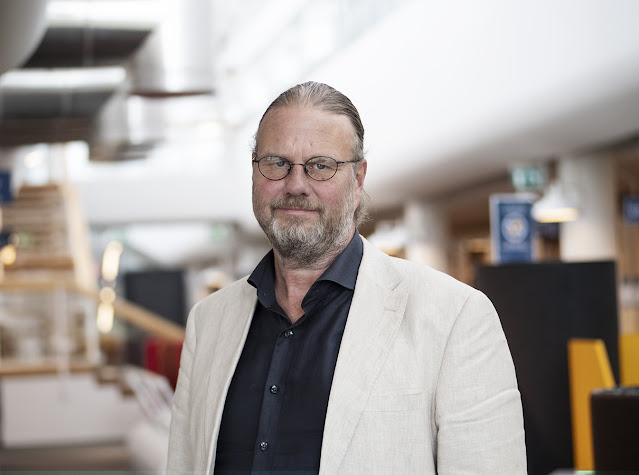 |
Wilhelm Widmark
|
Hardy: You
mentioned that a lot of senior academics were involved in your discussions.
What about the grassroots of the academic community?
Wilhelm: We can't work with everybody, but
we have to have communication aimed at everyone and explain what we are doing. I
think many researchers see it as a shame that the profit margins of the big
commercial publishers are so high. It is money that should stay within the
research system and not go to for-profit publishers. But at the same time, they
are forced to publish with them. It is really hard not to!
We had many
researchers who when we cancelled the Elsevier agreement wrote to us and said
that they accept this decision and stand by us. Regarding the Read-access libraries
will manage to get access to publications in some way.
Hardy: You
mentioned that you are doing these negotiations with these three publishers as
a trial or pilot. How long is your pilot period?
Wilhelm: We are negotiating the new
agreements during this year, and the pilot will start in 2024 if we reach
agreements.
Hardy: What
do you think other countries like Ireland can learn from what you've done so
far?
Wilhelm: One important thing is to have all
universities engaged. The university management must be involved in those discussions
because it's a question about money, and it's a question about institutional strategy.
We are also working with the big Swedish research funders on how we should
finance the different agreements. We have discussions with all stakeholders, that
is really important.
You
shouldn't rely only on transformative agreements. You need to have discussions
about other paths towards Open Access. How can researchers take back the
control of the publishing system? We are talking about a national or European
publishing platform like ORE (Open Research Europe). We need to have
alternative publishing routes, for example we need to look at Diamond Open Access. You also need to look at the
copyright issues and you need to have strategies for that as well. You can't
work just with transformative agreements. You need to have different routes to
make Open Access work.
Hardy: You
are referring to the Rights Retention Strategy?
Wilhelm: Yes, definitely. No university in
Sweden has implemented it yet, but we are talking about it. For instance, The
Norwegian University of Science and Technology
(NTNU) has introduced its Rights
Retention Strategy last
year, and we are
looking at how that works. I don't know how it is like in Ireland, have you
looked at Rights Retention Strategy?
Hardy: We
are expecting a national project funded by the National Open Research Forum that will look at Rights Retention
in the Irish context. We are also talking to colleagues in the UK who have
implemented a Rights Retention Strategy in their institution [see for example this Open Voices interview with Emma
Francis from Aberdeen University]. I think we have learned in the last few
years that maybe we were too keen on transformative agreements as a single
solution for Open Access?
Wilhelm: Yes, and that is also the advice from
the transformative agreement group that you need to work on different routes to
have a complete and diverse picture for the future. Also, we should not accept
to pay for hybrid journals and subscriptions in the future. We really have to
discuss with the publishers how that can work.
I think
what others campus can learn from Sweden is that we have made a lot of mistakes
initially with transformative agreements. Now we have got good transformative
agreements in terms of Open Access coverage, but they are too expensive, and we
don't want to keep on paying into that system. We would like to change the
system, to drive the publishers to more Open Access beyond transformative
agreements. Sweden is a small country, and we need more countries to tell
publishers that they will not accept to pay both subscription and Open Access fees
in the future. But we need to do it all together across the world!
Hardy: My
final question: You said you have an Open Access rate of around 80% in Sweden at
the moment, which is brilliant and a lot better than for example Ireland. Will
you succeed to reach the final 20% with your current strategy?
Wilhelm: Initially, our Open Access rate
might even drop because if we walk away from certain agreements that will have
a negative impact on the rate. But that is important, as we can't accept that the
old transformative agreements will be the ongoing business model. At the same
time our goal is to reach 100% Open Access, but not at any price.
Hardy: Wilhelm,
thanks a lot for our chat.
Wilhelm Widmark is
the Library Director of Stockholm University since 2012. Since 2020 he is also Senior
Adviser for Open Science to the President of Stockholm University. He has a
Master of Arts in Literature and a Master of Arts in Library and information
science from Uppsala University. Wilhelm is active in the Open Science movement
in Sweden and Europe. He is the Vice-Chairman of the
Swedish Bibsam consortium and a member of the Swedish Rectors Conference Open
Science group. He is also a member of EUA’s Expert Group on Open
Science and one of the Directors
of EOSC Association.
The interview was conducted by Hardy Schwamm,
Open Scholarship Librarian at the University of Galway.




 Posts

