Showing posts with label open science. Show all posts

14 Dec 2023

The Lower Decks: A Symposium on Janeway and Open Access Publishing

This post includes the abstracts and streamed recordings of most talks delivered at the inaugural Janeway Symposium, which took place at Birkbeck, University of London on 7th and 8th September 2023.

The itinerary consisted of five panels: (1) Janeway/Open Library of Humanities Report (links one & two), (2) Innovative Uses of Janeway, (3) Content and Creativity, (4) Editorial Innovation and, (5) Open Access, Communities and Activism.

Ronan Cox, Jim Rogers and I had the opportunity to speak about the School of Communications Undergraduate Journal (panel 5: Open Access, Communities and Activism), published by DCU Library in partnership with the School of Communications.

Learn more about Janeway here.


11 Sept 2023

Open Access in Sweden - moving beyond transformative agreements

Post by Hardy Schwamm, Open Scholarship Librarian at the University of Galway and member of the libfocus team. This interview below was originally posted on the Hardiblog on 11 September 2023.

In this interview of the Open Voices series Hardy talks to Wilhelm Widmark, Library Director at Stockholm University Library, about the Open Access strategy of Swedish universities and research institutes who are organised in the Bibsam Consortium.

Hardy: Hello Wilhelm. Thanks for talking to me. To start our conversation can you introduce yourself, please?

Wilhelm: Sure, I'm Wilhelm Widmark and I'm working as the Library Director at Stockholm University and have done that for the last 12 years. I'm also the Senior Advisor to the President of Stockholm University in questions regarding Open Science. I work as the Vice Chair of the Swedish Bibsam Consortium where our University President, Astrid Söderbergh Widding, is the Chair and we work closely together in the Consortium. I'm also Director of EOSC, the European Open Science Cloud. In Sweden, we have the Rectors Conference of The Association of Swedish Higher Education Institutions which has different subgroups, and one of the groups is the Coordination Group of Open Science. We work together among universities on how we should pave the way forward for Open Science, and that is what the Coordination Group does.

Hardy: Can you summarise where you are with regards to Open Access in Sweden?

Wilhelm: We have a mandate from the Swedish Government that we should have reached 100% Open Access in 2021. It was in the latest Research Bill. But we didn't reach the target in 2021. Currently, we have around 80% Open Access to Swedish research articles. You mentioned the ESAC Registry of Transformative Agreements where Ireland is among the top 10. Sweden is sometimes on the top spot, sometimes it is Norway, sometimes Finland. [As of 1 September 2023, Finland is number one, Sweden number two, see below or check ESAC].

Screenshot from ESAC Market Watch
So, we are currently at around 80% Open Access but we strive to get to 100%!

For Swedish researchers Open Access is not a question anymore. For them it is obvious that all publications should be Open Access. They don't think that Open Access is anything strange or undesirable, it is part of their academic life.

Hardy: How does the Swedish approach differ from other countries in Europe?

Wilhelm: I think the most important thing we have done is to delegate the decisions to a higher level than library directors. At all annual meetings of the Rectors Conference, we have discussions about the different publisher agreements and strategies. The Steering Committee of the Bibsam Consortium is elected by the Rectors Conference. So, both rectors and library directors sit on the Steering Committee of the consortium. We discuss everything with the rectors. Open Access is not a library question, it is an issue that has a place in the income trays of the presidents of universities!

Hardy: What has your experience been with transformative agreements?

Wilhelm: Well, we have worked very hard to get a lot of transformative agreements. We have made a lot of mistakes on the way, and it has cost a lot to have them. But if you see the rates of how much Open Access we have now, that has been a success. How the transformative agreements are driving the transformation towards Open Access that is a bigger problem. Because I think today, many of the publishers want to stay within transformative agreements as the basis of their new business model and that won't work for us. So, we will keep on having both systems for a while, both open and closed, and I don't think that the transformative agreements will change that.

Hardy: What are your next steps forwards? You mentioned the subscription elements of these agreements. What is the Swedish approach to that?

Wilhelm: We started a strategy group in Sweden two years ago which is called Beyond Transformative agreements, where we had a lot of discussions during two years on what will happen in the future. What kind of strategy should the Consortium have to go beyond transformative agreements? The group was composed of university management, negotiators from the Bibsam Consortium, researchers from different disciplines and the funders as well. I think it is important that we have all stakeholders within the research system in this group. The strategy group has finished a report that will be published soon, both in Swedish and in English, because many colleagues in Sweden and internationally are interested in what we are doing.

This group made some suggestions on what we should do concerning the negotiations with the publishers. One of the main strategies is that during a certain period we should not pay for anything but publishing as a service. Right now we are trying this out in some negotiations: with Elsevier, Sage and ACS (American Chemical Society). We are testing our ideas on these three publishers.

Hardy: That also means if you don't agree a publish agreement you would “walk away”. Is that an option?

Wilhelm: That will always be an option if we don't reach our goals. We can walk away from the negotiations and leave the agreement. We have done that once before with Elsevier in 2018. The Bibsam Consortium was without an agreement with Elsevier for one and a half year, and that is definitely a possibility for the future as well.

Hardy: If you walk away from a Publish & Read agreement, you will not fall back to a read-only agreement? There is a consensus in the Bibsam Consortium that this is how you will act?

Wilhelm: You need to have a lot of communication before you walk away from an agreement. When we did that with Elsevier that was a decision by the Rectors Conference. All the universities were behind it. The decision did not come from the Consortium, it was made by the Directors Conference.

If you walk away, you really need to explain why you are doing it and then also have strategies in place at the affected universities of how to handle questions, and we have experience with such a situation. When we didn’t have access to Elsevier journals for one and a half year, most researchers understood why we did it, and they backed us up. All rectors stood behind it, and no university arranged any subscriptions with Elsevier during that period. You really need to do this strategic work before the negotiations, and you have to stand by your decision! After that, help your students and researchers in the best way you can do.
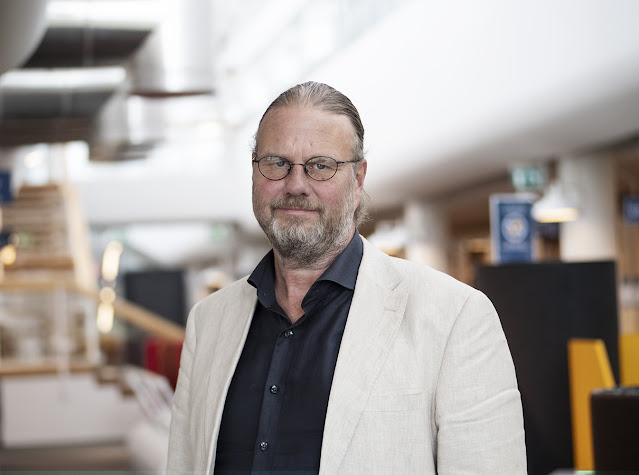
 

Wilhelm Widmark

Hardy: You mentioned that a lot of senior academics were involved in your discussions. What about the grassroots of the academic community?

Wilhelm: We can't work with everybody, but we have to have communication aimed at everyone and explain what we are doing. I think many researchers see it as a shame that the profit margins of the big commercial publishers are so high. It is money that should stay within the research system and not go to for-profit publishers. But at the same time, they are forced to publish with them. It is really hard not to!

We had many researchers who when we cancelled the Elsevier agreement wrote to us and said that they accept this decision and stand by us. Regarding the Read-access libraries will manage to get access to publications in some way.

Hardy: You mentioned that you are doing these negotiations with these three publishers as a trial or pilot. How long is your pilot period?

Wilhelm: We are negotiating the new agreements during this year, and the pilot will start in 2024 if we reach agreements.

Hardy: What do you think other countries like Ireland can learn from what you've done so far?

Wilhelm: One important thing is to have all universities engaged. The university management must be involved in those discussions because it's a question about money, and it's a question about institutional strategy. We are also working with the big Swedish research funders on how we should finance the different agreements. We have discussions with all stakeholders, that is really important.

You shouldn't rely only on transformative agreements. You need to have discussions about other paths towards Open Access. How can researchers take back the control of the publishing system? We are talking about a national or European publishing platform like ORE (Open Research Europe). We need to have alternative publishing routes, for example we need to look at Diamond Open Access. You also need to look at the copyright issues and you need to have strategies for that as well. You can't work just with transformative agreements. You need to have different routes to make Open Access work.

Hardy: You are referring to the Rights Retention Strategy?

Wilhelm: Yes, definitely. No university in Sweden has implemented it yet, but we are talking about it. For instance, The Norwegian University of Science and Technology (NTNU) has introduced its Rights Retention Strategy last year, and we are looking at how that works. I don't know how it is like in Ireland, have you looked at Rights Retention Strategy?

Hardy: We are expecting a national project funded by the National Open Research Forum that will look at Rights Retention in the Irish context. We are also talking to colleagues in the UK who have implemented a Rights Retention Strategy in their institution [see for example this Open Voices interview with Emma Francis from Aberdeen University]. I think we have learned in the last few years that maybe we were too keen on transformative agreements as a single solution for Open Access?

Wilhelm: Yes, and that is also the advice from the transformative agreement group that you need to work on different routes to have a complete and diverse picture for the future. Also, we should not accept to pay for hybrid journals and subscriptions in the future. We really have to discuss with the publishers how that can work.

I think what others campus can learn from Sweden is that we have made a lot of mistakes initially with transformative agreements. Now we have got good transformative agreements in terms of Open Access coverage, but they are too expensive, and we don't want to keep on paying into that system. We would like to change the system, to drive the publishers to more Open Access beyond transformative agreements. Sweden is a small country, and we need more countries to tell publishers that they will not accept to pay both subscription and Open Access fees in the future. But we need to do it all together across the world!

Hardy: My final question: You said you have an Open Access rate of around 80% in Sweden at the moment, which is brilliant and a lot better than for example Ireland. Will you succeed to reach the final 20% with your current strategy?

Wilhelm: Initially, our Open Access rate might even drop because if we walk away from certain agreements that will have a negative impact on the rate. But that is important, as we can't accept that the old transformative agreements will be the ongoing business model. At the same time our goal is to reach 100% Open Access, but not at any price.

Hardy: Wilhelm, thanks a lot for our chat.

Wilhelm Widmark is the Library Director of Stockholm University since 2012. Since 2020 he is also Senior Adviser for Open Science to the President of Stockholm University. He has a Master of Arts in Literature and a Master of Arts in Library and information science from Uppsala University. Wilhelm is active in the Open Science movement in Sweden and Europe. He is the Vice-Chairman of the Swedish Bibsam consortium and a member of the Swedish Rectors Conference Open Science group. He is also a member of EUA’s Expert Group on Open Science and one of the Directors of EOSC Association.   

The interview was conducted by Hardy Schwamm, Open Scholarship Librarian at the University of Galway.

3 Mar 2020

Open Access eXchange (OAeX): an economic model and platform for fundraising open scholarship services

This article describes the Open Access eXchange (OAeX) project, a pragmatic and comprehensive economic model and fundraising platform for open scholarship initiatives. OAeX connects bidders with funders at scale and right across the open scholarship spectrum through crowdfunding: financial expenditure is regulated by a market of freely competing providers and financial transactions and transparency are assured by a clearing-house entity. Specifically, OAeX seeks to facilitate open access publishing without the barrier of article processing charges (APCs), as well as contribute to solving challenges of transparency and economic sustainability in open scholarship projects in the broader sense.

Read the full piece at http://doi.org/10.1629/uksg.500


17 Oct 2019

Towards open science - Stockholm University Library (Erasmus Exchange, 23-27 September 2019)

A good few weeks ago I attended and contributed to the Erasmus staff week for librarians at Stockholm University. The full programme is available {here}. See also speaker profiles {here}.

In short, the experience was most rewarding from a professional development but also a personal perspective. I met a bunch of really interesting and like-minded librarians from all over Europe. Many thanks to SU Library for organising and hosting.

Instead of critically expanding on delegates' professional contexts, experiences and  insights around scholarly communications, I thought it would be more productive to let their presentations speak for themselves. Below is an overview of the week's programme with contextual links to (all) presentations embedded in their respective titles.

Separately, I pushed out the below follow-up questions to my colleagues.
  1. What is your professional opinion about Plan S?
  2. Is your institutional repository Plan-S ready?
  3. Can you describe your research-assessment regime at your institution (at researcher and institutional level)?
  4. Do you provide incentives to academics within your institution for publishing research via the open access route (gold/diamond/green etc.)? If so, what are they?
Responses can be viewed {here} - many thanks to everyone who kindly responded.

Towards open science...

Monday 23rd September
  1. {Lecture} Open Science: facts, opportunities and challenges (Wilhelm Widmark, Library Director)
Tuesday 24th September
  1. Vienna Technological University, Austria
  2. University of Cologne, Germany
  3. Friedrich-Alexander University, Erlangen-Nuernberg, Germany
  4. Eotvos Lorand University, Budapest, Hungary
  5. Kozminski University, Warszaw, Poland
  6. La Sapienza University, Rome, Italy
  7. University of Zagreb, Croatia
  8. Kauna University of Technology, Lituhania
  9. Mimar Sinam Faculty of Fine Arts, Istanbul, Turkey
Workshops
Workshop 1: Research Data Management services at Stockholm University
Workshop 2: Workflows for OA agreements and APC management at SU University Press (see also notes)

Wednesday 25th September
  1. {Lecture} National Coordination of Licence Negotiations - Advancing the transition to Open Access - A view from Sweden (Kunglia Biblioteket)
Thursday 26th September
  1.  Pablo de Olivade University, Sevilla, Spain
  2. University of Navarra, Spain
  3. Polytechnic Institute of Leiria, Portugal
  4. ENSSIB, the French National School of Library and Information Sciences, France
  5. University of Akureyri, Iceland
  6. Rejkjavik University, Iceland
  7. Dublin City University, Ireland (see also Bibs & Refs)
Workshops
Workshop 1: Stockholm University Press: Starting up a university press
(see also SUP's BPC quote form); (see also Marketing Guidelines for Authors and Editors)
Workshop 2: The consequences of cancelling the agreement with Elsevier

Friday, 27th September
  1. {Lecture} Open Science: a Researcher's perspective

Wilhelm Widmark / Överbibliotekarie

21 May 2019

Beyond records storage… Institutional repository Digital CSIC as service for open science

Digital CSIC is the institutional repository (IR) of the Spanish National Research Council (CSIC). CSIC’s network of libraries and archives is in charge of the leadership and management of this IR.

A few preliminary notes: the institution and its libraries

CSIC is the largest public, research institution in Spain and the third largest in Europe. Its researchers generate approximately the 20% of all scientific production in the country. Its mission is to foster, coordinate, develop and promote scientific and technological research of a multidisciplinary nature in order to contribute to the advancement of knowledge and economic, social and cultural development, as well as training staff and advise public and private organizations on these matters.

CSIC’s research scope involves the following fields:
  • Biology and biomedicine.
  • Humanities and social science.
  • Natural resources.
  • Agricultural sciences.
  • Physical science and technologies.
  • Materials science and technology.
  • Food science and technology.
  • Chemical science and technology.
There are research centres all over the country that belong to CSIC. In a number of them there is a library and/or an archive.

No few services are managed thanks to a well-conceived network of libraries and archives:
  • A discovery tool that provides access to all information resources (papers, books, digitalised collections, databases, software licenses, etc.) kept, subscribed and managed by CSIC’s libraries.
  • Remote access to those resources, despite not being physically in the institution.
  • Traditional services, such as loan, interlibrary loan, user/library orientation, reading room and reproduction of documents.
  • A digital reference service.
  • An institutional repository in which research outcomes are archived: Digital CSIC. All members of the research community of CSIC can upload metadata-enriched files to it.
  • The Digital.CSIC Direct Archiving Service by which research community can delegate the archiving of its research outcomes to librarians so as to ensure higher-quality metadata and a faster uploading.
  • The service GRANADO aimed at improving the management of libraries space as well as ensuring the conservation of its collections regardless of its format.
  • 100% Digital plan, which is offered by CSIC’s network of libraries and archives to CSIC institutes without libraries. It includes a number of library services.

A new librarianship context: from open access to open science

According to the Open Access (OA) libguide of the University of Pittsburgh library system (2019), Open Access refers to:
  • “A family of copyright licensing policies under which authors and copyright owners make their works publicly available
  • A movement in higher education to increase access to scholarly research and communication, not limiting it solely to subscribers or purchasers of works
  • A response to the current crisis in scholarly communication”.
Although providing free online access to journal articles began many years before the term "open access" was formally coined, computer scientists had been sharing anonymous archives through FTP since the 1970s and physicists had been self-archiving on arxiv since the 1990s (History of open access).

The concept Open Access was not formally established until the 2000s due to these statements: the Budapest Open Access Initiative (2002), the Bethesda Statement on Open Access Publishing (2003), and the Berlin Declaration on Open Access to Knowledge in the Sciences and Humanities (2003).

Two ways to accomplish Open Access statements emerged: green (research outcomes published on IRs) and gold roads (papers published on OA on their respective journals). However, the high costs of article processing charges (ACP) (Khoo, 2019) for pursuing gold road have resulted in that IRs are sometimes the only possible way for OA.

Not many years ago, the scope and sense of openness were widened by The Royal Society (2012) through its thought-provoking book Science as an open enterprise. The transcendence of Open Science (Anglada & Abadal, 2018) have come to the European Union. Indeed, European Commission (2019) has taken it into account on its new policies regarding research across Europe.

The FOSTER Plus (Fostering the practical implementation of Open Science in Horizon 2020 and beyond) project designed this taxonomy that organises all the related concepts:

Open Science Taxonomy. Source: Foster Open Science.
Open Science have brought out several relevant issues on how research is carried out, its outcomes and benefits for society, and the agents involved:
  • The fourth scientific revolution concerns big data, data mining and software.
  • Speaking of outcomes, openness does not only refer to papers published on journals or proceedings, but also the research data regardless of its format, e.g. databases, photographs, presentations, web sites and pages, videos, didactic materials, datasets, software and code. Moreover, research outcomes does not only belong to publishers and/or researchers, but also to society.
  • Data must be FAIR: Findable, Accessible, Interoperable and Reusable (Wilkinson et al, 2016. GO FAIR, 2019).
  • Ethics counts: data ownership, intellectual property rights, research integrity (SPARC Europe, 2019), privacy, security and safety.
  • There is much more need for investing in scientific literacy, science communication and open education than ever.
  • Now, a more variety of partnerships between research agents and society is feasible.
  • Evaluation of science and its metrics must change, as the current cites-based system is not enough to foster open science among scientists.

Digital CSIC as service for open science and researchers community

Looking at this new data-information-and-knowledge environment we will undoubtedly have to face, librarians must wonder how to adapt ourselves, our libraries and profession to address the issue.

Specifically, as for institutional repositories, the following are the actions taking up by the Digital CSIC IR to go beyond any digital library and play a service role for open science and research community.

Digital preservation

It goes without saying that the archiving of research papers on IRs contributes to their digital preservation. If we keep in mind the Levels of Digital Preservation established by the Digital Library Federation (2018), an Open Access Repository in and of itself can be a “tool” to cope with the five functional areas: storage and geographic location, file fixity and data integrity, information security, metadata and file formats.

Digital preservation must be planned. Although IRs can be a great deal of help, they must be tools that are integrated into a well-conceived digital preservation planification.

Digital CSIC (2019) currently offers the following digital-preservation-oriented actions:
  • Backups.
  • Storage of magnetic tapes.
  • Conversion of formats to more secure ones.
  • Periodic checks of the files integrity to prevent their corruption.
  • Monitoring of the technology environment to foresee possible migrations of obsolete formats or software.
  • Metadata for digital preservation.
  • Recommendation for file formats.

The archive of science

Digital CSIC pursue the archiving of all the research outcomes of its institution. As I said before, according to open science view, outcomes involves a wide range of resources: papers published on journals or proceedings, databases, photographs, presentations, web sites and pages, videos, didactic materials, datasets and software. That is precisely the mission of archives: the archiving and preservation of all the records generated as a result of the activity of the institution in which it is integrated and depends on. So, in a sense, an OA IR is the archive of science produced on its institution. In case copyright and intellectual issues do not allow to publish some resources on Open Access, it does not mean that those cannot have an embargo or be in closed access in order to preserve them.

Digital CSIC, which is built upon the software Dspace, has one community per field of knowledge in which CSIC researchers research. I listed those fields in the first epigraph of this post, all of them are accessible via https://digital.csic.es/community-list. There is a sub-community per each research institute devoted to a determined field of knowledge. Then, there are as many collections inside each sub-community as different types of information-or-data resources resulting from the research carried out by that research institute. The principle of provenance is present, thus the archive of science.

FAIR data

Taking FAIR Principles (GO FAIR, 2019) into consideration, I show how the IR Digital CSIC accomplishes them as followed:

Findable

F1. It uses the handle system to assign an URI to each digital object.

F2. The IR publishes intrinsic metadata, librarians ensure the contextual metadata and librarians along with researchers are committed in the description process to ensure rich metadata, such as the measurement devices used, the units of the captured data, the species involved, the genes/proteins/other that are the focus of the study, the physical parameter space of observed or simulated astronomical data sets, questions and concepts linked to longitudinal data, calculation of the properties of materials, or any other details about the experiment.

F3. Digital CSIC does it through dc.identifier.uri.

F4. They are, as Digital CSIC is indexed by the Spanish national aggregator RECOLECTA, OpenAIRE, share.osf.io, core.ac.uk, base-search.net, Google Scholar as well as being registered on re3data.org.

Accesible

A1.1 and A1.2. It uses OAI-PMH.

Interoperable

I1. It supports MARC, Dublin Core, RDF, ORE, MODS, METS and DIDL.

I2 and I3. It does.

Reusable

R1.1. dc.rights and dc.rights.license are used.

R1.2. dc.date.accessioned, dc.date.available and dc.description.provenance are used.

R1.3. It is partially accomplished. Digital CSIC tends to use dc.description as last resource.

Open Peer Review Module

Digital CSIC have integrated the first Open Peer Review Module (OPRM) for open access repositories that allows to make reviews and comments on already archived digital objects.

Open Peer Review Module. Source: Digital CSIC.
This tool is especially useful for receiving feedback that is bound to facilitate the improvement of research outcomes.

Impact, (alt)metrics and statistics of research

How can Digital CSIC measure the impact of its archived files?

First all of all, in the web page about general statistics, we can see them in terms of:
  • Number of research institutes per community (field of knowledge).
  • Number of items per community.
  • Number of items per research institute (top 20).
  • Number of research institutes by geographical distribution.
  • Number of items by geographical distribution.
  • Types of items (articles, conference paper, etc.).
  • Types of archived items per research institute.
  • Open Access: the percentage of OA items by type, year of deposit and community.
We can delimit them by date (year and/or month).

It also shows the number of archived objects by communities (field of knowledge), sub-communities (research centres), collections (types of documents per research centres) and authors. By research groups and research projects are being tested.
Source: Digital CSIC.
It is also possible to view statistics of any of the communities in terms of count of views, sub-community view count, collection view count, item count view and item download count. Besides, we can examine those by region/country/city in a geo map (thanks to Google Maps API) and along time.

As for single archived digital objects, we can see its views and downloads by region and along time. There is also information about altmetrics.
Source: Digital CSIC.

Web pages for researchers

Digital CSIC provides the possibility to generate web pages for researcher. They consist of:
  • An URI.
  • A personal statement with a nice picture.
  • Integration of profiles of other networks and IDs.
  • Statistics.
  • Concentration and organization of all their scientific production.

Automated archiving

Digital CSIC and some publishers came to an agreement so that they are archiving all the journal papers on this IR as long as their filiation contains CSIC.

Consultancy

Digital CSIC and its librarians give advice to the research community regarding a number of topics:
  • Technical use of Digital CSIC and guidance in the metadata description according to its policies.
  • Open Access mandates.
  • Profiles for researchers and research groups.
  • Intellectual property, copyright and licensing.
  • FAIR data.
  • Data management plans.

Final thoughts

The increasingly consciousness regarding the importance of open access, which we can even measure (Dubinsky, 2019), is undoubtedly good news. However, promoting open access is not enough. Institutional repositories seem need to evolve from merely digital libraries for storage of items. Librarians of research institutions must change their mindset to a service-oriented one. Service, here, has to do with open science and the researchers community. I have presented current developments of Digital CSIC, I hope it would be inspiring for other librarians. 

References

Anglada, L.; Abadal, E. (2018). ¿Qué es la ciencia abierta?. Anuario ThinkEPI, 12, 292-298.
doi: 10.3145/thinkepi.2018.43

Berlin Declaration on Open Access to Knowledge in the Sciences and Humanities (2003). Retrieved from https://openaccess.mpg.de/67605/berlin_declaration_engl.pdf

Bethesda Statement on Open Access Publishing (2003). Retrieved from https://legacy.earlham.edu/~peters/fos/bethesda.htm

Budapest Open Access Initiative (2002). Retrieved from https://www.budapestopenaccessinitiative.org/read

Digital CSIC (2019). Digital preservation policy. Retrieved from http://digital.csic.es/dc/politicas/#politica8

Digital Library Federation (2018). Levels of Digital Preservation. Retrieved from https://ndsa.org/activities/levels-of-digital-preservation/

Dubinsky, E. (2019). Does open access make cents? Return on investment in the institutional repository. College & Research Libraries News, 80(5). doi: 10.5860/crln.80.5.281.

European Commission (2019). Open Science. Retrieved from https://ec.europa.eu/research/openscience/index.cfm

Foster Open Science. Open Science Taxonomy. Retrieved from https://www.fosteropenscience.eu/themes/fosterstrap/images/taxonomies/os_taxonomy.png

GO FAIR. FAIR Principles. Retrieved from https://www.go-fair.org/fair-principles/

History of open access. Retrieved from https://en.wikipedia.org/wiki/History_of_open_access

Khoo, S. Y.-S. (2019). Article Processing Charge Hyperinflation and Price Insensitivity: An Open Access Sequel to the Serials Crisis. LIBER Quarterly, 29(1), 1–18. doi: 10.18352/lq.10280

SPARC Europe (2019). Research Integrity through Open Science and FAIR Data. Retrieved from https://sparceurope.org/wp-content/uploads/dlm_uploads/2019/03/SPARCEurope_ResearchIntegrityBrief.pdf

The Royal Society (2012). Science as an open enterprise. Retrieved from https://royalsociety.org/~/media/royal_society_content/policy/projects/sape/2012-06-20-saoe.pdf

University of Pittsburgh library system (2019). Open Access @ Pitt: All About OA. Retrieved from https://pitt.libguides.com/openaccess

Wilkinson, M. D. et al (2016). The FAIR Guiding Principles for scientific data management and stewardship. Scientific data, 3:160018. doi: 10.1038/sdata.2016.18.