14 Oct 2023

Libfocus Link-out for October, 2023

Welcome to the October edition of the Libfocus link-out, an assemblage of library-related things we have found informative, educational, thought-provoking and insightful on the Web over the past while.

A woman looking at a phone with x on the screen, shelves of books, computer code in circles, a robot, a book cover, a stack of papers with a lock around them, a speech bubble
Images featured in this month's libfocus link-out articles

What Is A Repository For?
A lot of librarians feed repositories and keep them working. But what should the function of a repository be? Here, Ian Scott from the Building the Commons blog is “re-imagining” Humanities Commons, a popular discipline repository. He introduces interesting concepts of the repository as a “broadcast tower”, a “filter” or a “workroom”.

Looking towards a brighter future. the potentiality of AI and digital transformations to library spaces
A new research report by University of Leeds Libraries examines the potential and the practicalities of using AI in library spaces.

New guidelines urge UK libraries not to avoid controversial books and ideas
In this Guardian books article Ella Creamer presents the CILIP report which responds to calls for librarians to remove books from library shelves. ‘In [a] polarised world, it is important our sector is clear in its opposition to censorship.'

10 Simple Tips On Presenting Complex Information
"Regardless of the topic, all presenters share the common goal of ensuring that they keep their audience stimulated." Author Maurice deCastro explains that "exceptional presenters aim for much more; they want their audience to feel connected to them and their message. They want their listeners to remember their key message and then act on it."

We read X's new privacy policy so you don't have to
This Mashable article by Caitlin Welsh and Stan Schroeder examines Twitter/X's new privacy policy and how it will affect the way your personal data is used. The platform will now collect users' employment and educational history and biometric data and has plans to use that data to train AI.

Congress could stop free public access to government-funded research
In this Statnews article by Mayank Chugh and Jessica Polka the authors look at how the US Congress may block the public from having immediate and free access to U.S. federal government research.

Podcast: America's Top Librarian on the Rise of Books Bans
ALA President Emily Drabinski speaks to Tressie McMillan Cottom on public libraries becoming a battleground for today's culture wars.

The Future of AI in Information Services
In an ever evolving A.I. landscape, how do Higher Education Information Services step up? Beth Burnet and Jon Phipps from the University of Essex Library Services take a dive into the world of AI and explore how HE libraries and information services can respond and support their users.

Testing the EU 2022 Code of Practice on Disinformation, a pilot empirical study
Online disinformation is a fast-changing phenomenon and in this study, X is flagged as the worst offender among big tech. 

Supporting student mental health through teaching practices
Liz Cheveney's study, presented in the In the Library with the lead pipe blog looks at the ways librarians introduce pedagogies of care into teaching as a method of being more aware and supportive to mental health in the classroom.

Ask the Chefs: What is the Single Most Pressing Issue for the Future of Peer Review?
Several chefs from The Scholarly Kitchen identified obstacles peer review is currently facing. In particular, they talk about the increasing difficulty in finding reviewers, the impact of AI and bias, as well as the lack of recognition and financial incentives for peer reviewers.

Scholarly Communication Librarianship and Open Knowledge
Scholarly Communication Librarianship and Open Knowledge is an open textbook and practitioner’s guide that collects theory, practice, and case studies from nearly 80 experts in scholarly communication and open education. Divided into three parts: (1) What is Scholarly Communication?, (2) Scholarly Communication and Open Culture, (3) Voices from the Field: Perspectives, Intersections, and Case Studies.

10 Oct 2023

“It will be the Making of You”: Reflecting on my first 18 months working in Maynooth University Library’s Makerspace

Libfocus is delighted to present the third prize post for the CONUL Training and Development Library Assistant Blog Awards 2023. The author is Dr. Heidi Campbell, Digital Engagement Curator, Maynooth University Library

They say it takes roughly 6 months to settle into a new job, a year to feel competent in it and then enough space, time and support to make an impact. My name is Heidi Campbell, and I am the Digital Engagement Curator at Maynooth University Library (MU). I manage the MU Library Makerspace and this blog is a reflection on my first 18 months in the role. The initial areas of focus for me have included the following; developing a makerspace brand for MU Library, reinstating the makerspace after the Covid hiatus, the development of meaningful social media engagement for the makerspace, the initiation of virtual tours and experiences and the resumption of the main stay of any makerspace - our very successful 3D printing service. 

3D Printing 3D printing lends itself well to the adage ’practice makes perfect’. There is a reason why makerspaces highlight the importance of failing because it is only when the prints are failing, and the filament is jamming, that you start to develop a feel for each printer and develop that "maker’s brain”. 


3D printed Pikachu 


As Digital Engagement Curator I strive to promote the makerspace online and throughout the university. I especially want to encourage MU Library staff to engage with us. I approached this by offering seasonal gifts for library staff. One of my favourite giveaways was to celebrate Lunar New Year where anyone born in the year of the rabbit received a beautiful red rabbit lantern. 


3D printed lantern with the Chinese rabbit character, with perforations to allow light to shine though


I hope to make this an annual tradition for staff. Next year I will be looking for all the dragons in the library. 🐉 

If you would like to know more about our 3D printing service and its role in supporting research, please read MU Library Makerspace – 3D Printing Supporting Research

Virtual Tours and Experiences 

Photo of the Ricoh Theta V 360 camera


When I joined MU Library, we had a 360 camera, however virtual tours had not yet been created with it. This was a great way for me to make a mark and develop a new initiative within the library. To read all about my time creating virtual tours and experiences see my addition to the Library Treasures Blog. 


Connecting with Makers 
One of the best parts of this job is the camaraderie I have found in the makerspace community and the knowledge sharing, encouragement and advice that is always on hand among other makers. These essential connections were evident during this year's CONUL Conference 2023 held in Cork when for the first time we presented a joint “CONUL Makerspace”. The event showcased services from University of Limerick, University of Galway and University College Cork. For my part I brought our 360 camera and demonstrated how to create virtual tours and displayed some of our virtual experiences. 

Social Media


Multiple 3D printed cats used as giveaways with new orders and for visitors 


One of the best ways to promote and to connect with other makerspaces is through social media. The MU Library Makerspace did not have its own account, and so I launched our own Twitter and TikTok handles @MULibraryMaker. As the numbers grew, I created a consistent timetable of posts to allow our growing audience to follow the stories and developments from the makerspace. Mondays mark #makermonday which showcases various types of making I have been working on throughout the week. This includes anything from intricate 3D print projects to equipment testing. I also like to use this hashtag to give praise to the many makers who design and create 3D prints or develop makerspace initiative that we use. Every Friday I post about specific 3D printing issues, fails, and developments using the hashtag #filamentfriday. I also use these days to ask for help, suggestions and input from other makers out there. 


#ClayCat 


Image of ClayCat wearing a bandana during workout session to promote health and wellbeing

 
Inspired by other libraries and makerspaces using animation, Lego and stop-motion as fun tools for digital engagement, I decided to test out claymation. I built a character based on MU Library’s famous resident, library cat. My hope is that I can develop a character that audiences can connect and build a relationship with. Every Wednesday I create a short stop-motion claymation video of #claycat engaging in some way with our collections or spaces. My poster presented at the CONUL Conference 2023 included this simple sway exhibition of Clay Cats development – view here. 

18 Months and Beyond 


A lot has been achieved in a short space of time. None of it would have been possible without the guidance and support I have encountered in this role. There is much more to come from the MU Library Makerspace including expanding our virtual experiences, exploring the world of 3D scanning and creating handling objects as teaching aides. And of course, #claycat will continue to comment throughout!

All images by Heidi Campbell

3 Oct 2023

Camera, Action: Finding Photography in UCD Special Collections

Libfocus is delighted to present the second prize post for the CONUL Training and Development Library Assistant Blog Awards 2023. The author is Kathryn Milligan, Library Assistant at University College Dublin (Special Collections).

From time to time, an opportunity comes to delve into a library’s holdings and reconsider how a selection of materials might be gathered and presented to readers and researchers. Recently, I have been looking anew at material related to photography and its history in UCD Special Collections. From the very beginning of this project, it was clear that our holdings included a range of interesting materials, from nineteenth century book, journals, and manuals to large photographic prints. An early stand out item was Sun Pictures of Rocky Mountain Scenery which I later wrote about for the UCD Cultural Heritage Collections blog.

Albumen print frontispiece and title page of F. V. Hayden, Sun Pictures of Rocky Mountain Scenery (UCD SC 11.Q.17)
1. Albumen print frontispiece and title page of F. V. Hayden, Sun Pictures of Rocky Mountain Scenery (UCD SC 11.Q.17).
Further opportunity to explore these collections came in December 2022 when we welcomed two historians of photography to the reading room. In putting together a display for this, I browsed the shelves to identify further notable items, coming across (for example) the imposing Notes on Irish Architecture, published in 1875, several photographic prints of John Henry Newman, and a photogravure by Alvin Langdon Coburn.

Display of photographic prints and photographically illustrated books, UCD Special Collections Reading Room
2. Display of photographic prints and photographically illustrated books, UCD Special Collections Reading Room
These searches suggested the need for a more systematic review to identify photography related holdings within our collections, and a method of making them more findable and accessible to our readers. Building on the knowledge I had gained when writing about Sun Pictures, I decided that identifying and improving the records of photographically illustrated books would be of significant benefit and be of interest to a wide range of disciplines within the university.

Albumen print frontispiece and title page of Richard A. Procter, ‘The Moon’ (UCD SC RCSCI 525.3 PRO).
3. Albumen print frontispiece and title page of Richard A. Procter, ‘The Moon’ (UCD SC RCSCI 525.3 PRO).
Photographically illustrated books contain an actual photographic print, such as an albumen or carbon print. They emerged in the mid-nineteenth century as photographic processes developed more generally. These were not books that a former owner or collector had personalised through extra-illustration, but rather fully conceived works that brought together letterpress and photography, with images either tipped in or bound with the text block.

Photographically illustrated books can be found across a range of scholarly and general interest publications, from travel and spectroscopy to biography and medical research. Given the nature of the holdings in UCD Special Collections, which includes books from the libraries of UCD’s antecedent institutions like the Catholic University of Ireland and the Royal College of Science for Ireland, our print collections cover many disciplinary fields.

A shelf in UCD Special Collections: are there any photographically illustrated books here?!
4. A shelf in UCD Special Collections: are there any photographically illustrated books here?!

To assist with identifying these books, I turned to three main resources: Julia van Haaften’s ''Original Sun Pictures': A Checklist from New York Public Library's Holdings of Early Works Illustrated with Photographs, 1844 – 1900’; Helmut Gernsheim’s Incunabula of British Photographic Literature, 1839 – 1875; and the British Library’s online Catalogue of Photographically Illustrated Books. I also consulted more specialised publications on Irish photographic history to identify additional material. As well as basic catalogue searches, I also did systematic shelf searches, replicating van Haaften’s own process in
NYPL.

After consulting the published bibliographies, catalogues, and creating a basic listing of items, I consulted with my Special Collections colleagues to see how this new information could be best captured within our existing catalogue records. We settled on adding relevant MARC fields, capturing information such as the photographer or photographic company’s name, and whether the book appears in van Haaften and Gernsheim. The genre heading ‘Photographically Illustrated Books’ from the LOC’s Thesaurus of Graphical Material was also added to each record.

Example of an updated catalogue record for a photographically illustrated book
5. Example of an updated catalogue record for a photographically illustrated book

To date, I have identified close to thirty photographically illustrated books containing a range of photographic and early photomechanical processes. There are also examples of early colour reproductions and photographic literature. For many of these publications, further research is needed to fully identify the photographic processes employed, as well as details of the photographer or publisher. Our readers can now find these books by searching for ‘photographically illustrated books’ and filtering the search results to ‘Special Collections’ on the UCD Library Catalogue. This basic listing also enables us to easily promote these holdings across the university and seek opportunities to incorporate them into teaching, learning and public engagement programmes, aligning with Pillar 2 of the Library’s Strategic Plan.

I hope that research on, and analysis of, these books will continue and that a standardised cataloguing guideline can be used for similar holdings across UCD Library’s Cultural Heritage collections. For now however, we can look to these books to learn about (and enjoy) the story they tell us about the development of photography and the illustrated book.

Hand-coloured albumen print frontispiece and title page of Alexander W. M. Clark Kennedy, ‘The Birds of Berkshire and Buckinghamshire’ (UCD SC Store 598.094229 KEN)
6. Hand-coloured albumen print frontispiece and title page of Alexander W. M. Clark Kennedy, ‘The Birds of Berkshire and Buckinghamshire’ (UCD SC Store 598.094229 KEN)
References

Chandler, Edward. Photography in Ireland: The Nineteenth Century (Dublin: Edmund
Burke, 2001).

Gernsheim, Helmut. Incunabula of British Photographic Literature, 1839 – 1875 (London
and Berkeley: Scolar in association with Derbyshire College of Higher Education, 1984).

van Haaften, Julia. ''Original Sun Pictures': A Checklist from New York Public Library's
Holdings of Early Works Illustrated with Photographs, 1844 – 1900’, Bulletin of The New
York Public Library (80:3 Spring 1977).

All photographs are by the author, and show items from UCD Special Collections.

26 Sept 2023

Evolving with Energy: Enhancing Spaces for Students at the Glucksman Library at the University of Limerick

Libfocus is delighted to present the winning post for the CONUL Training and Development Library Assistant Blog Awards 2023. The author is Maeve Shanahan, Library Assistant at University of Limerick.

We tend to think of libraries as unchangeable brick-and-mortar places. This idea gives us comfort in a rapidly changing world, and libraries remain a steadfast academic refuge for many. I think back on my student days at the University of Limerick (UL), writing and researching for my master’s dissertation in the library. Those caffeine-fuelled late nights, spent in commiseration with my fellow students, are now fond memories. 

As I’ve become a staff member at the Glucksman Library, my perspective has changed, and so has the UL Library. With expanded digital resources and a physical extension to the building, the Glucksman Library of 2023 is almost unrecognizable to my past student self. If I didn’t work here as a Library Assistant, I’d be jealous of all the new spaces students get to experience.

Since 2018, in addition to doubling the amount of available study space, introducing smart systems like the Automated Storage and Retrieval System (ASRS) to store books, and creating novel learning spaces for collaborative work, the Library has kept a close eye on student’s evolving needs.

Students gathered around a table in the Glucksman Library
05.06.2019 University of Limerick, Glucksman Library Digital Scholarship. Photo by Alan Place.

More Than Books
As we prepare for the new semester and a new cohort of students, we acknowledge that for many, the UL Library has become more than a study space. Students are seeking out alternative spaces to just be—the cost of living is increasing, so students are commuting in, or sharing crowded rental homes (Cathal, 2022). The Glucksman Library provides students with reliable WiFi, group study rooms, temperature-controlled air, soft seating options, late opening hours, and a café right outside our access gates. We have become the place where students can work, attend online lectures, relax, and re-energize. 

As COVID restrictions disappear in the country’s rear-view, the University of Limerick has turned its focus onto directly impacting student’s mental health and wellbeing. UL officially signed the charter for Healthy Ireland earlier this year with the Higher Education Authority. As the campus continues its commitments to better the health of students and staff through Healthy UL promotional initiatives, the Glucksman Library, with guidance from the Library Spaces Manager, a librarian in the Collections & Spaces team, has turned its attention to promoting student’s wellbeing within the Library itself. With the goal of improving mental and physical health, the UL Library has recently acquired ten standing desks, three desk bikes, and two MetroNaps EnergyPods for students to use. It is well documented in decades of research that students need rest to help improve academic performance and maintain positive mental health (Zhou et al., 2022).

EnergyPods & Their Benefits
Imagine how nice it would be to be able to safely take a twenty-minute break during a hectic workday if you were feeling overwhelmed, or not awake enough to drive home. It sounds too good to be true! I once suffered from a migraine in between college lectures and had to nap on a mud trodden carpeted floor in a high-traffic hallway. I certainly could have used an EnergyPod during my time as a student.

MetroNaps EnergyPods are described by their creators as “the world’s first office nap chair.” Although they look like something out of a sci-fi film, EnergyPods are modern chairs designed for relaxation, with a privacy visor, reclining leg rest, and a speaker/headset for calming music and meditations. Users can rest for up to twenty minutes at a time.

A MetroNap EnergyPod in the Glucksman Library.
21.07.2023. MetroNaps EnergyPod in Glucksman Library. Photos by Maeve Shanahan.

The Library in the University Hospital Limerick installed an EnergyPod in 2020 and found it successful in battling fatigue and stress in student doctors (Mindo, 2020). In a recent study of 93 NHS staff members using the EnergyPods during night shifts, researchers surveyed the staff before and after using the EnergyPod for three months. The results concluded with 81% of NHS staff feeling more alert and 83% were more energized after their twenty-minute rest (Dore et al., 2021). 

Conclusion 
Starting in university is a time of intense change and stress. Academic pressure, social pressures, and personal issues can affect student’s mental health. As students spend more time in the Library, we want to help them maintain good physical and mental health. We hope that by introducing EnergyPods to the Library, we will help students relax during high stress times, and allow our users to embrace the Glucksman as more than a book-filled brick building.

Bibliography
Cathal (2022). “UL Student Life release stark findings from their Accommodation Survey.” UL Student Life. 21 August. Available at: https://www.ulstudentlife.ie/ulstudentlife_accommodationsurvey/ (Accessed: 26 July 2023).

Dore, Eoin et al. (2021). “Sleep is the best medicine: How rest facilities and EnergyPods can improve staff wellbeing.” Future Healthcare Journal, 8(3) pp. 625–628 [Online]. Available at: https://doi:10.7861/fhj.2020-0261 (Accessed: 26 July 2023).

Mindo (2020). “‘Energy pod’ launched in Limerick to fight fatigue in hospital staff.” The Medical Independent, 31 July. Available at: https://www.medicalindependent.ie/in-thenews/breaking-news/energy-pod-launched-in-limerick-to-fight-fatigue-in-hospital-staff/ (Accessed: 26 July 2023).

Zhou, Jingxin et al. (2022) “Research trends in college students' sleep from 2012 to 2021: A bibliometric analysis.” Frontiers in Psychiatry, 13, 20 Sep. Available at: https://doi:10.3389/fpsyt.2022.1005459 (Accessed: 26 July 2023).


11 Sept 2023

Open Access in Sweden - moving beyond transformative agreements

Post by Hardy Schwamm, Open Scholarship Librarian at the University of Galway and member of the libfocus team. This interview below was originally posted on the Hardiblog on 11 September 2023.

In this interview of the Open Voices series Hardy talks to Wilhelm Widmark, Library Director at Stockholm University Library, about the Open Access strategy of Swedish universities and research institutes who are organised in the Bibsam Consortium.

Hardy: Hello Wilhelm. Thanks for talking to me. To start our conversation can you introduce yourself, please?

Wilhelm: Sure, I'm Wilhelm Widmark and I'm working as the Library Director at Stockholm University and have done that for the last 12 years. I'm also the Senior Advisor to the President of Stockholm University in questions regarding Open Science. I work as the Vice Chair of the Swedish Bibsam Consortium where our University President, Astrid Söderbergh Widding, is the Chair and we work closely together in the Consortium. I'm also Director of EOSC, the European Open Science Cloud. In Sweden, we have the Rectors Conference of The Association of Swedish Higher Education Institutions which has different subgroups, and one of the groups is the Coordination Group of Open Science. We work together among universities on how we should pave the way forward for Open Science, and that is what the Coordination Group does.

Hardy: Can you summarise where you are with regards to Open Access in Sweden?

Wilhelm: We have a mandate from the Swedish Government that we should have reached 100% Open Access in 2021. It was in the latest Research Bill. But we didn't reach the target in 2021. Currently, we have around 80% Open Access to Swedish research articles. You mentioned the ESAC Registry of Transformative Agreements where Ireland is among the top 10. Sweden is sometimes on the top spot, sometimes it is Norway, sometimes Finland. [As of 1 September 2023, Finland is number one, Sweden number two, see below or check ESAC].

Screenshot from ESAC Market Watch
So, we are currently at around 80% Open Access but we strive to get to 100%!

For Swedish researchers Open Access is not a question anymore. For them it is obvious that all publications should be Open Access. They don't think that Open Access is anything strange or undesirable, it is part of their academic life.

Hardy: How does the Swedish approach differ from other countries in Europe?

Wilhelm: I think the most important thing we have done is to delegate the decisions to a higher level than library directors. At all annual meetings of the Rectors Conference, we have discussions about the different publisher agreements and strategies. The Steering Committee of the Bibsam Consortium is elected by the Rectors Conference. So, both rectors and library directors sit on the Steering Committee of the consortium. We discuss everything with the rectors. Open Access is not a library question, it is an issue that has a place in the income trays of the presidents of universities!

Hardy: What has your experience been with transformative agreements?

Wilhelm: Well, we have worked very hard to get a lot of transformative agreements. We have made a lot of mistakes on the way, and it has cost a lot to have them. But if you see the rates of how much Open Access we have now, that has been a success. How the transformative agreements are driving the transformation towards Open Access that is a bigger problem. Because I think today, many of the publishers want to stay within transformative agreements as the basis of their new business model and that won't work for us. So, we will keep on having both systems for a while, both open and closed, and I don't think that the transformative agreements will change that.

Hardy: What are your next steps forwards? You mentioned the subscription elements of these agreements. What is the Swedish approach to that?

Wilhelm: We started a strategy group in Sweden two years ago which is called Beyond Transformative agreements, where we had a lot of discussions during two years on what will happen in the future. What kind of strategy should the Consortium have to go beyond transformative agreements? The group was composed of university management, negotiators from the Bibsam Consortium, researchers from different disciplines and the funders as well. I think it is important that we have all stakeholders within the research system in this group. The strategy group has finished a report that will be published soon, both in Swedish and in English, because many colleagues in Sweden and internationally are interested in what we are doing.

This group made some suggestions on what we should do concerning the negotiations with the publishers. One of the main strategies is that during a certain period we should not pay for anything but publishing as a service. Right now we are trying this out in some negotiations: with Elsevier, Sage and ACS (American Chemical Society). We are testing our ideas on these three publishers.

Hardy: That also means if you don't agree a publish agreement you would “walk away”. Is that an option?

Wilhelm: That will always be an option if we don't reach our goals. We can walk away from the negotiations and leave the agreement. We have done that once before with Elsevier in 2018. The Bibsam Consortium was without an agreement with Elsevier for one and a half year, and that is definitely a possibility for the future as well.

Hardy: If you walk away from a Publish & Read agreement, you will not fall back to a read-only agreement? There is a consensus in the Bibsam Consortium that this is how you will act?

Wilhelm: You need to have a lot of communication before you walk away from an agreement. When we did that with Elsevier that was a decision by the Rectors Conference. All the universities were behind it. The decision did not come from the Consortium, it was made by the Directors Conference.

If you walk away, you really need to explain why you are doing it and then also have strategies in place at the affected universities of how to handle questions, and we have experience with such a situation. When we didn’t have access to Elsevier journals for one and a half year, most researchers understood why we did it, and they backed us up. All rectors stood behind it, and no university arranged any subscriptions with Elsevier during that period. You really need to do this strategic work before the negotiations, and you have to stand by your decision! After that, help your students and researchers in the best way you can do.
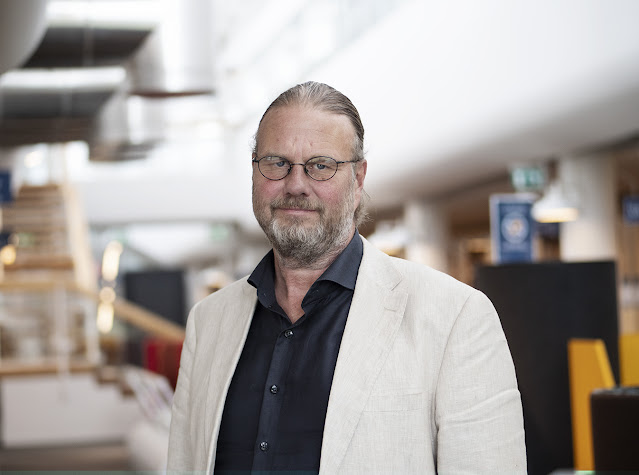
 

Wilhelm Widmark

Hardy: You mentioned that a lot of senior academics were involved in your discussions. What about the grassroots of the academic community?

Wilhelm: We can't work with everybody, but we have to have communication aimed at everyone and explain what we are doing. I think many researchers see it as a shame that the profit margins of the big commercial publishers are so high. It is money that should stay within the research system and not go to for-profit publishers. But at the same time, they are forced to publish with them. It is really hard not to!

We had many researchers who when we cancelled the Elsevier agreement wrote to us and said that they accept this decision and stand by us. Regarding the Read-access libraries will manage to get access to publications in some way.

Hardy: You mentioned that you are doing these negotiations with these three publishers as a trial or pilot. How long is your pilot period?

Wilhelm: We are negotiating the new agreements during this year, and the pilot will start in 2024 if we reach agreements.

Hardy: What do you think other countries like Ireland can learn from what you've done so far?

Wilhelm: One important thing is to have all universities engaged. The university management must be involved in those discussions because it's a question about money, and it's a question about institutional strategy. We are also working with the big Swedish research funders on how we should finance the different agreements. We have discussions with all stakeholders, that is really important.

You shouldn't rely only on transformative agreements. You need to have discussions about other paths towards Open Access. How can researchers take back the control of the publishing system? We are talking about a national or European publishing platform like ORE (Open Research Europe). We need to have alternative publishing routes, for example we need to look at Diamond Open Access. You also need to look at the copyright issues and you need to have strategies for that as well. You can't work just with transformative agreements. You need to have different routes to make Open Access work.

Hardy: You are referring to the Rights Retention Strategy?

Wilhelm: Yes, definitely. No university in Sweden has implemented it yet, but we are talking about it. For instance, The Norwegian University of Science and Technology (NTNU) has introduced its Rights Retention Strategy last year, and we are looking at how that works. I don't know how it is like in Ireland, have you looked at Rights Retention Strategy?

Hardy: We are expecting a national project funded by the National Open Research Forum that will look at Rights Retention in the Irish context. We are also talking to colleagues in the UK who have implemented a Rights Retention Strategy in their institution [see for example this Open Voices interview with Emma Francis from Aberdeen University]. I think we have learned in the last few years that maybe we were too keen on transformative agreements as a single solution for Open Access?

Wilhelm: Yes, and that is also the advice from the transformative agreement group that you need to work on different routes to have a complete and diverse picture for the future. Also, we should not accept to pay for hybrid journals and subscriptions in the future. We really have to discuss with the publishers how that can work.

I think what others campus can learn from Sweden is that we have made a lot of mistakes initially with transformative agreements. Now we have got good transformative agreements in terms of Open Access coverage, but they are too expensive, and we don't want to keep on paying into that system. We would like to change the system, to drive the publishers to more Open Access beyond transformative agreements. Sweden is a small country, and we need more countries to tell publishers that they will not accept to pay both subscription and Open Access fees in the future. But we need to do it all together across the world!

Hardy: My final question: You said you have an Open Access rate of around 80% in Sweden at the moment, which is brilliant and a lot better than for example Ireland. Will you succeed to reach the final 20% with your current strategy?

Wilhelm: Initially, our Open Access rate might even drop because if we walk away from certain agreements that will have a negative impact on the rate. But that is important, as we can't accept that the old transformative agreements will be the ongoing business model. At the same time our goal is to reach 100% Open Access, but not at any price.

Hardy: Wilhelm, thanks a lot for our chat.

Wilhelm Widmark is the Library Director of Stockholm University since 2012. Since 2020 he is also Senior Adviser for Open Science to the President of Stockholm University. He has a Master of Arts in Literature and a Master of Arts in Library and information science from Uppsala University. Wilhelm is active in the Open Science movement in Sweden and Europe. He is the Vice-Chairman of the Swedish Bibsam consortium and a member of the Swedish Rectors Conference Open Science group. He is also a member of EUA’s Expert Group on Open Science and one of the Directors of EOSC Association.   

The interview was conducted by Hardy Schwamm, Open Scholarship Librarian at the University of Galway.

10 Sept 2023

Libfocus Link-out for September 2023

Welcome to the September edition of the Libfocus link-out, an assemblage of library-related things we have found informative, educational, thought-provoking and insightful on the Web over the past while.

Shows: a lifebuoy floating in water; a blurred image of a person writing in a book;  two people; an illustration of a girl holding a skull; an infographic; a printer's mark; a woman in a hat, a hand browsing bookshelves and the author Stephen Fry
Images featured in this month's libfocus link-out articles


Widow Printers of the 16th Century: Charlotte Guillard and Édmonde Toussain

This blog post by Madeline Birnbaum, Trinity College Library (Cambridge) Graduate Trainee 2022-3, about the lives of two widowed women who inherited their husbands' print workshops, delving into the often unseen work of women in printing and publishing at the time, and the ultimate intersection of Guillard and Toussain's lives.


An article by Janet Manley for LitHub on how children's literature gets chosen for and prescribed to children by adults, and the weight of that influence, as well as nostalgia, which then drives publishing trends.


Report from Equity in Open Access workshop #3: Making waves in APC & waiver practice


More and more evidence is emerging that Article Processing Charges (APCs) in Open Access publishing have unintended consequences, mainly putting up a barrier to publishing for authors in lower income regions. This OASPA workshop report by Malavika Legge discusses seven proposed principles of practice to increase equity in Open Access publishing.


All Things Must Pass


This opinion piece from Andrew Barker and Elaine Sykes (Lancaster University) reflects on the role of libraries in changing the institutional research culture that puts openness and equity at its centre.


What do you get when you combine artificial intelligence with human stupidity? There are, unfortunately, numerous responses to that question. But in this particular case, as detailed by Arwa Mahdawi in The Guardian, the answer can be found in Iowa’s Mason City Community School District, where school administrators are using ChatGPT to help them ban books.


I don’t think many people would argue with the idea that it’s your attitude that makes all the difference in life. Your attitude also makes a huge difference when it comes to public speaking and presenting too, which is often something many people overlook. Learn more in this post by presenting coach Maurice DeCastro.


Melina Spanoudi writes about The University of Wolverhampton's Big Bookshare project in The Bookseller. This project aims to boost the literacy and wellbeing of over 1,000 prisoners in four Kent prisons. Stephen Fry and Kit de Waal will take part in the pilot project, which also seeks to increase the volume and diversity of reading in prisons. 


This article by Éadaoín Lynch of The Scottish Book Trust looks at the many ways public libraries in Scotland positively impact society. Though visitor numbers have increased since 2010, government funding for libraries has decreased, despite research that suggests that every £1 invested in libraries returns between £5 and £7 a year for the UK economy.


This new report from the OCLC Global Council focuses on libraries of the future and how they will drive change to meet the evolving needs of users.


Wired writer Amanda Hoover presents a recent example of a published academic paper with a curious sentence included within has shed light on the relationship between AI and the research process.


Lam Thuy Vo contemplates the troubles of a world, perceived through an algorithmically curated lens, and the effects this has on us as people and as a society.


Open Access Author Contracts and Alignment with the Open Ethos: A Global Study 


Melissa H. Cantrell and Sarah Wipperman report on the findings of their DOAJ survey, which explores the implementation of rights and licensing expectations (“open access ethos”) in contracts between authors and publishers.
Posted on Sunday, September 10, 2023 | Categories: